




In ecommerce, when a product isn’t selling well, the problem often has less to do with the product itself and more with how customers experience it.
A poorly structured product page, a confusing checkout flow, or a mismatch between the audience and the offer can all impact performance. Without clear data, it’s almost impossible to identify which of these factors is responsible.
That’s where ecommerce analytics tools become essential. They give businesses visibility into customer behavior, marketing performance, and sales patterns, transforming large volumes of data into actionable insights.
Instead of relying on intuition, ecommerce teams can use ecommerce data analytics to understand how customers navigate the store, where friction appears in the funnel, and what drives conversions.
In this guide, we’ll explore the best ecommerce analytics tools, what each one reveals about your business, and how they can be combined to support a data-driven ecommerce strategy.
What Are Ecommerce Analytics Tools?
Ecommerce analytics tools are platforms designed to collect and analyze data generated by your online store. They track how visitors arrive at your site, how they interact with different pages, and whether those interactions eventually lead to a purchase.
In practice, these tools monitor areas such as customer behavior, sales performance, marketing attribution, and ecommerce performance metrics across the buying journey.
By connecting these data points, businesses gain a clearer picture of the health of their online operations.
For example, analytics can help answer questions like:
- Which marketing channels attract high-value customers?
- Where do visitors abandon the checkout process?
- Which product pages receive traffic but fail to convert?
- Which blog posts support your ecommerce analytics for SEO efforts?
One important point is that no single analytics platform provides the complete picture. High-performing ecommerce brands typically combine several tools to balance quantitative ecommerce data analytics, such as traffic and conversion rates, with qualitative insights like user behavior and feedback.
Understanding how to use analytics tools ecommerce teams rely on is what ultimately transforms raw numbers into strategic insights.
Essential Ecommerce Analytics Tools for High-Growth Stores
Several platforms are widely recognized as the best ecommerce analytics tools used by modern online stores. Each one contributes a different layer of insight, helping teams understand both what is happening and why it happens.
Google Analytics

Google Analytics remains one of the most important ecommerce analytics tools for online businesses. It tracks how visitors arrive at your website, how they interact with pages, and whether those interactions lead to revenue.
Through GA4’s event-based tracking model, businesses can monitor the entire ecommerce journey, from product views to completed purchases.
This allows teams to analyze conversion tracking ecommerce data, identify funnel drop-offs, and evaluate the real impact of marketing campaigns.
Beyond conversion tracking, Google Analytics also plays a major role in ecommerce analytics for SEO. It allows teams to see which organic pages attract traffic, how users behave once they arrive, and whether those visits translate into meaningful engagement or sales.
For founders and marketing teams, these insights turn raw traffic data into a powerful foundation for a data-driven ecommerce strategy.
Shopify Analytics
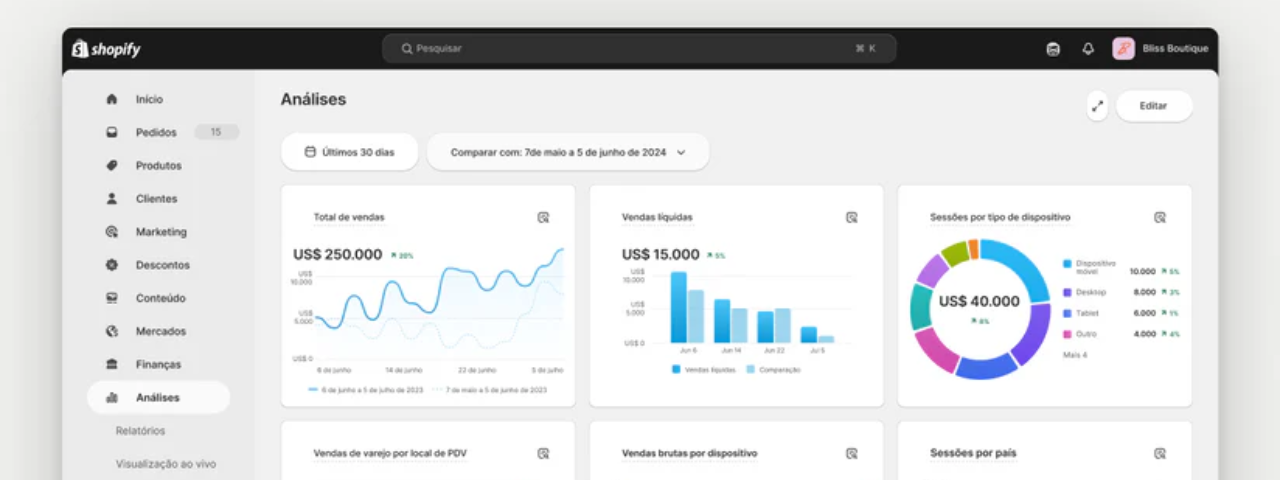
For brands running their stores on Shopify, Shopify Analytics provides an integrated layer of ecommerce data analytics directly inside the platform.
The dashboards track key ecommerce performance metrics such as conversion rate, average order value, customer retention, and traffic sources.
Because this data comes directly from the store’s transaction system, it offers a reliable overview of overall performance.
Shopify Analytics is especially useful for understanding product demand and revenue distribution across different channels. Merchants can analyze whether traffic from paid ads, organic search, or social media generates the most profitable customers.
When combined with other ecommerce analytics tools like Google Analytics, Shopify Analytics helps connect marketing insights with real sales outcomes.
Hotjar
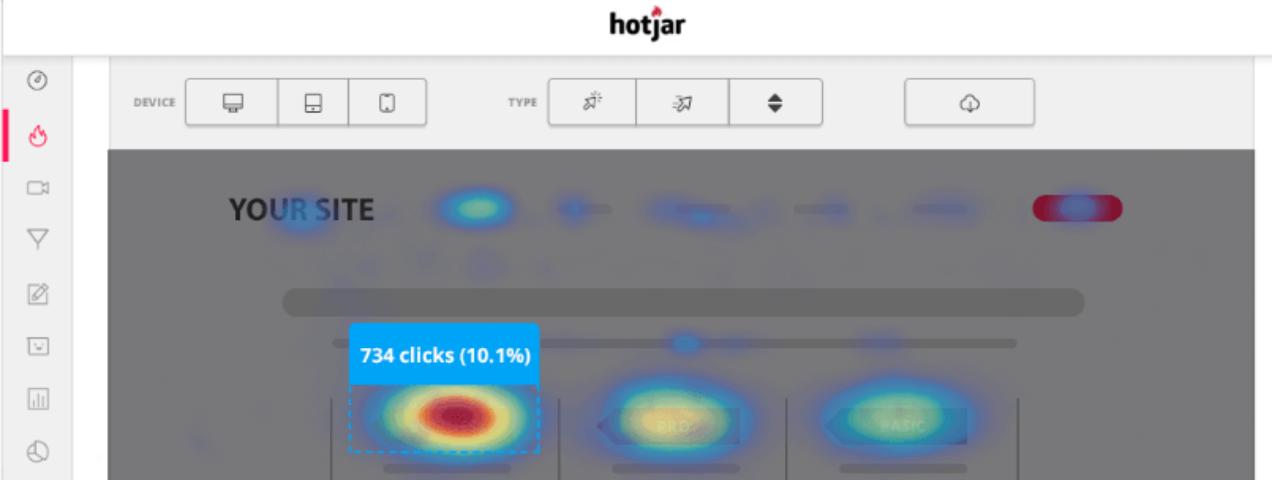
While traditional ecommerce analytics tools reveal what users do, tools like Hotjar help explain why those behaviors occur.
Hotjar focuses on behavioral analytics, offering heatmaps, session recordings, and feedback tools that visualize how visitors interact with your store.
For example, heatmaps highlight where users click the most, while scroll maps reveal how far they read before losing interest. Session recordings allow teams to observe real navigation journeys and identify usability issues that affect conversions.
These insights are extremely valuable for improving UX optimization for ecommerce and identifying friction points that impact key ecommerce performance metrics.
Crazy Egg
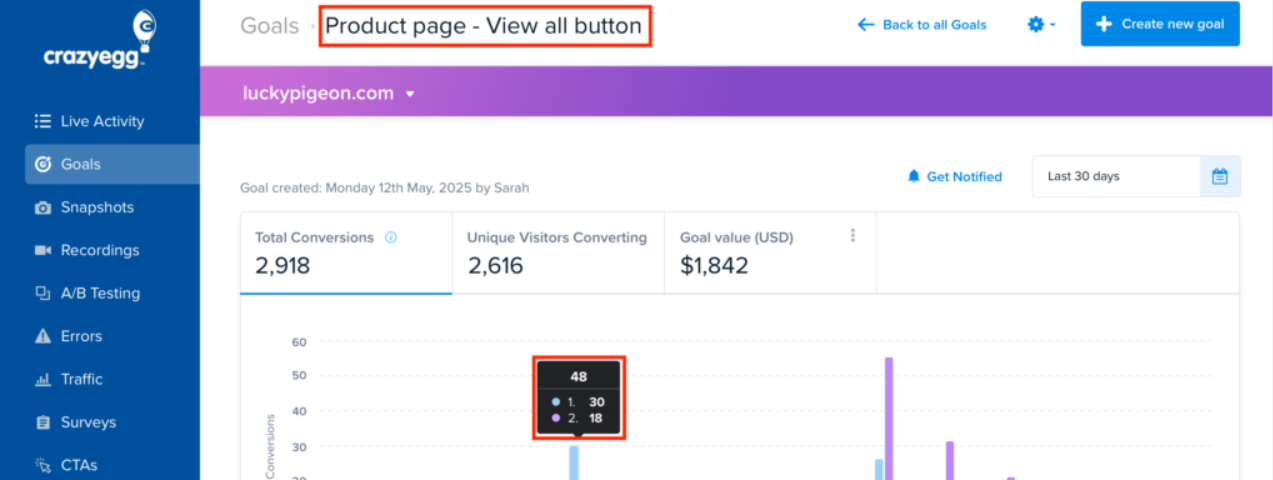
Crazy Egg complements traditional ecommerce data analytics platforms by visualizing user interaction with page elements.
Using heatmaps, scroll maps, and overlay reports, the platform reveals which parts of a page capture attention and which areas users ignore.
One of its most distinctive features, the “Confetti” report, segments clicks based on traffic source, device type, or referral channel.
This helps ecommerce teams better understand how visitors from different marketing channels behave once they land on the site.
For teams focused on conversion tracking ecommerce improvements, Crazy Egg provides a visual perspective that helps identify subtle design issues affecting conversion performance.
Mixpanel
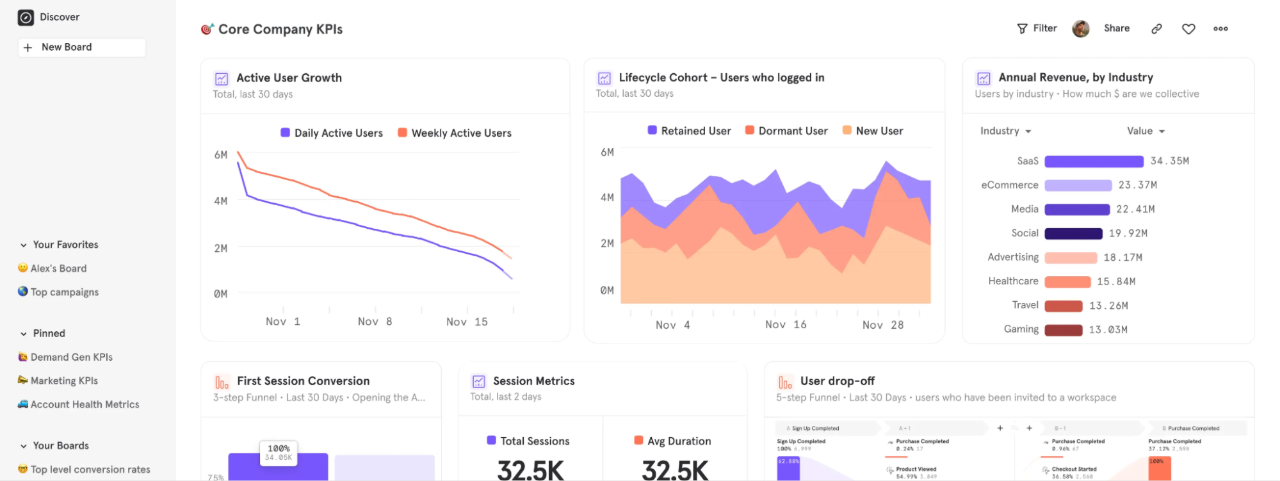
Mixpanel approaches analytics from a product interaction perspective, focusing on event tracking rather than sessions.
This allows ecommerce teams to analyze detailed user actions such as product views, add-to-cart behavior, and checkout completion steps.
Mixpanel’s strength lies in its ability to build customizable funnels and user segments. Teams can analyze how different customer groups move through the purchasing journey and identify patterns that influence retention and repeat purchases.
For companies investing heavily in experimentation and growth optimization, Mixpanel becomes a powerful engine for ecommerce data analytics and behavioral insights.
Kissmetrics
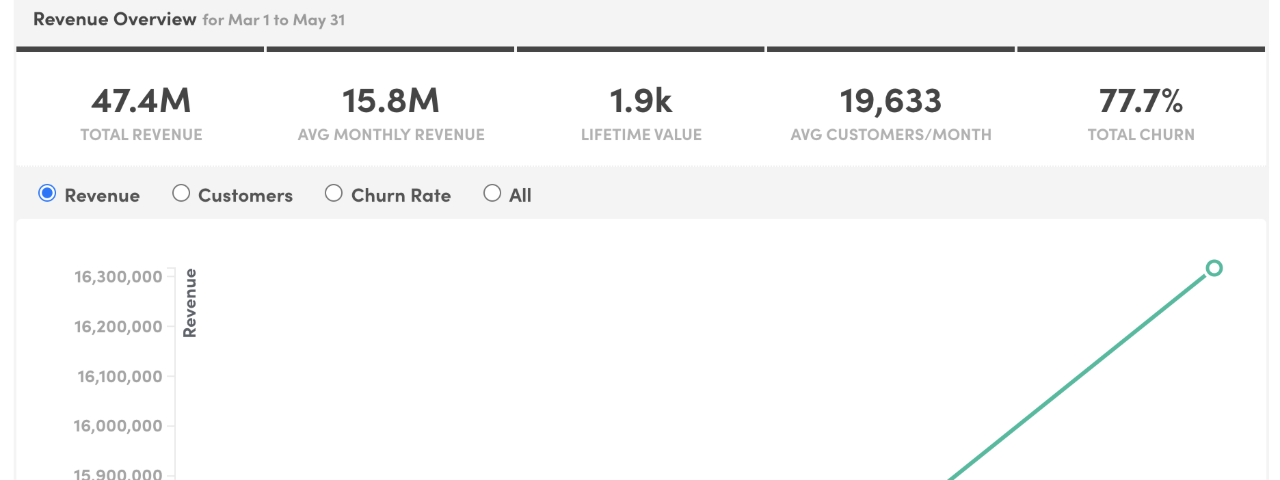
Kissmetrics focuses on understanding the entire customer lifecycle, tracking user behavior across multiple visits rather than individual sessions.
This allows businesses to analyze patterns related to acquisition, retention, and customer lifetime value. Through features like cohort analysis and funnel reporting, Kissmetrics reveals how users interact with the store over time.
For ecommerce brands investing in marketing and customer acquisition, these insights help optimize campaigns and strengthen a data-driven ecommerce strategy.
Understanding how different customer segments behave allows teams to refine marketing spend, improve retention strategies, and ultimately increase lifetime value.
How Analytics Tools Improve Ecommerce Performance
Collecting data alone doesn’t generate growth. The real value of ecommerce analytics tools comes from translating insights into optimization strategies.
Identifying Funnel Bottlenecks
One of the most valuable applications of ecommerce data analytics is identifying friction within the purchase funnel.
Using tools like Google Analytics or Kissmetrics, teams can analyze each step of the buying journey, from product page visits to checkout completion.
By tracking conversion tracking ecommerce events, businesses can detect where visitors abandon the process and investigate the underlying causes. These insights allow teams to apply CRO best practices and remove friction that prevents conversions.
Improving UX Through Behavioral Insights
Behavioral platforms like Hotjar and Crazy Egg reveal patterns that traditional ecommerce analytics tools often miss.
Heatmaps may show that visitors never scroll far enough to see a call-to-action, while session recordings can reveal confusion during navigation or checkout.
These behavioral insights allow teams to redesign pages based on real user behavior, improving UX and strengthening key ecommerce performance metrics.
Using Data to Strengthen SEO Performance
Analytics also plays a crucial role in understanding the connection between SEO traffic and revenue performance.
Through ecommerce analytics for SEO, businesses can analyze which organic pages generate qualified traffic and which pages convert visitors into customers.
This insight allows teams to refine their SEO strategy for ecommerce, focusing content efforts on pages that contribute directly to revenue rather than simply generating traffic.
Building a Data-Driven Ecommerce Strategy
The most effective ecommerce companies don’t rely on a single analytics platform.
Instead, they combine multiple ecommerce analytics tools to build a complete performance ecosystem.
A typical stack may include:
- Google Analytics for traffic insights and conversion tracking ecommerce data
- Shopify Analytics for store performance and ecommerce performance metrics
- Mixpanel or Kissmetrics for deeper customer journey analysis
- Hotjar or Crazy Egg for behavioral insights
When these platforms work together, businesses can connect marketing performance, user behavior, and revenue data into one unified data-driven ecommerce strategy.
How Ecommerce Data Impacts Conversion Rate Optimization (CRO)

One of the biggest advantages of using ecommerce analytics tools is their ability to support continuous conversion rate optimization (CRO).
When businesses combine behavioral insights with performance metrics, they gain a much clearer understanding of how different user segments interact with the store.
Tools like Google Analytics and Mixpanel allow teams to analyze customer segments and track specific actions across the buying journey, making it easier to design and run effective A/B tests.
At the same time, platforms such as Kissmetrics and Google Analytics help measure the real impact of marketing campaigns. By tracking conversion events, acquisition channels, and customer lifetime value, businesses can evaluate marketing ROI and adjust media investments based on performance.
Visual behavior tools like Hotjar and Crazy Egg add another layer of insight by revealing how customers actually experience the site.
Heatmaps, session recordings, and interaction reports help teams identify usability issues, misplaced calls-to-action, and friction points that reduce conversions.
When these insights are combined, ecommerce teams can move beyond guesswork and build a truly data-driven ecommerce strategy focused on improving user experience and maximizing conversion performance.
Conclusion
Ecommerce analytics tools do far more than generate charts and dashboards.
They provide the visibility businesses need to understand customer behavior, measure ecommerce performance metrics, and identify opportunities to improve conversions.
By combining quantitative insights from ecommerce data analytics with behavioral understanding of user interactions, ecommerce teams can build a smarter, more scalable growth strategy.
The goal isn’t simply collecting more data. It’s learning how to use analytics tools ecommerce businesses rely on to transform insights into better decisions, improved user experiences, and sustainable growth.
At Vasta, we help ecommerce brands transform analytics into action. Our team combines SEO, CRO, UX, and data analysis to uncover hidden opportunities inside your store and turn them into measurable results.
If you're ready to move beyond data reports and start making decisions that truly impact growth, explore how Vasta helps ecommerce brands optimize performance and scale with confidence.