



Google Search Console platform properties allow brands, publishers, and creators to track how content from Instagram, TikTok, X, and YouTube performs across Google Search.
Unlike native social media analytics, these reports focus on search visibility, including clicks, impressions, CTR, average position, queries, and the posts that attract traffic from Google.
Google officially expanded Search Console with this property type in the annoucement on July 2026, following its earlier social channel experiment. Each account is added as a separate property, and creators can use the feature even without owning a website.
For ecommerce brands, this creates a clearer way to identify which social posts generate organic search visibility and which topics deserve stronger product pages, landing pages, videos, or editorial content.
What Are Google Search Console Platform Properties?
Google Search Console platform properties are dedicated properties for supported social media and video accounts.
Instead of adding a domain or URL prefix, users can connect an account from one of four available platforms:
- Instagram;
- TikTok;
- X;
- YouTube.
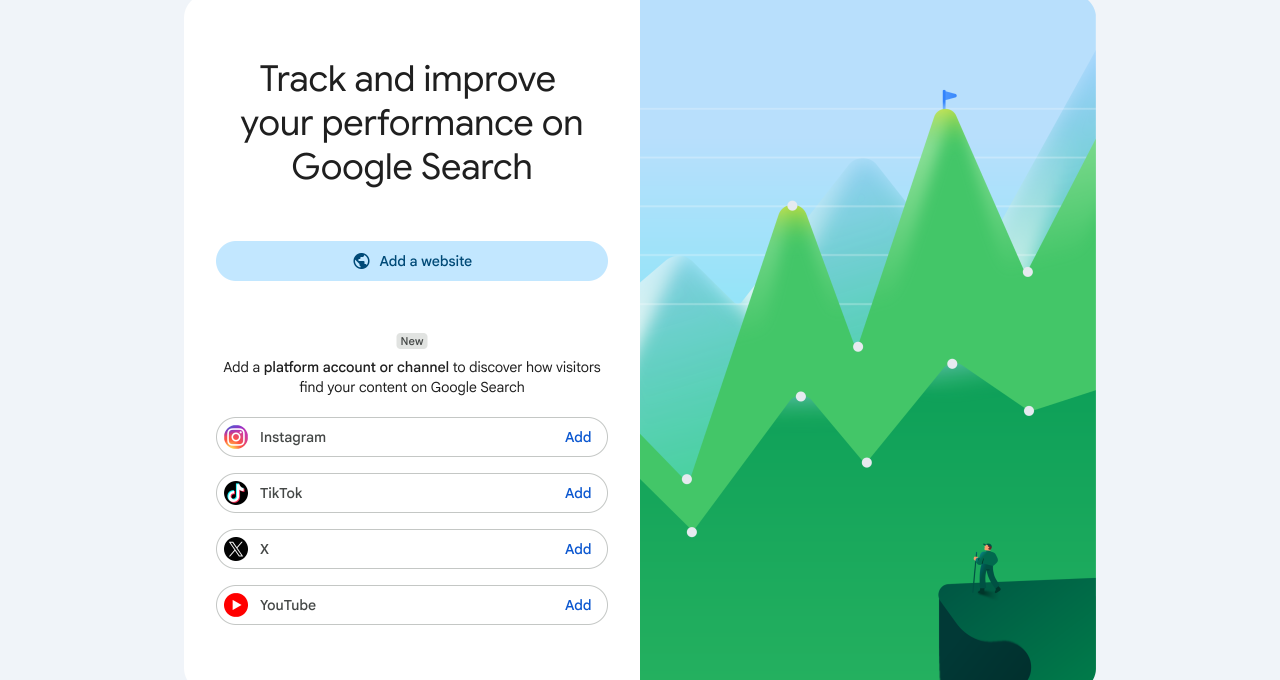
To activate one, users can open the property selector in Search Console, choose Add property, select the platform and follow the verification steps. Once confirmed, the property becomes available, although reporting data may take a few days to appear. Each account must be added separately.
Each platform is tracked as its own property, keeping its data separate from the others.
The feature also goes beyond site owners. Google specifically introduced platform properties for creators and publishers, including people who do not have their own websites. A social account can therefore have a measurable presence in Google Search without being attached to a verified domain.
What Changed Since Google’s First Social Media Experiment?
In the first experiment, Google began tracking social media visibility in Search Console by automatically identifying social channels connected to selected websites and displaying their performance inside Search Console Insights. The report included clicks, impressions, search queries, top content, audience locations and traffic from surfaces such as Images, Videos, News and Discover.
Platform Properties turn that early test into a more structured Search Console feature. The main changes include:
- access expanding through a gradual rollout;
- users being able to connect and authorize accounts directly;
- each platform having its own property;
- reporting through Performance, Insights and Achievements;
- availability beyond website owners;
- access for creators without a website.
The earlier experiment offered a combined view of website and social channel discovery. The new version gives each supported account its own reporting environment.
With this change, social content gains its own place within Search Console, allowing brands and creators to evaluate its organic visibility independently from website performance.
What Can Platform Properties Measure?
Platform Properties show how social and video content is discovered through Google Search and Google Discover.
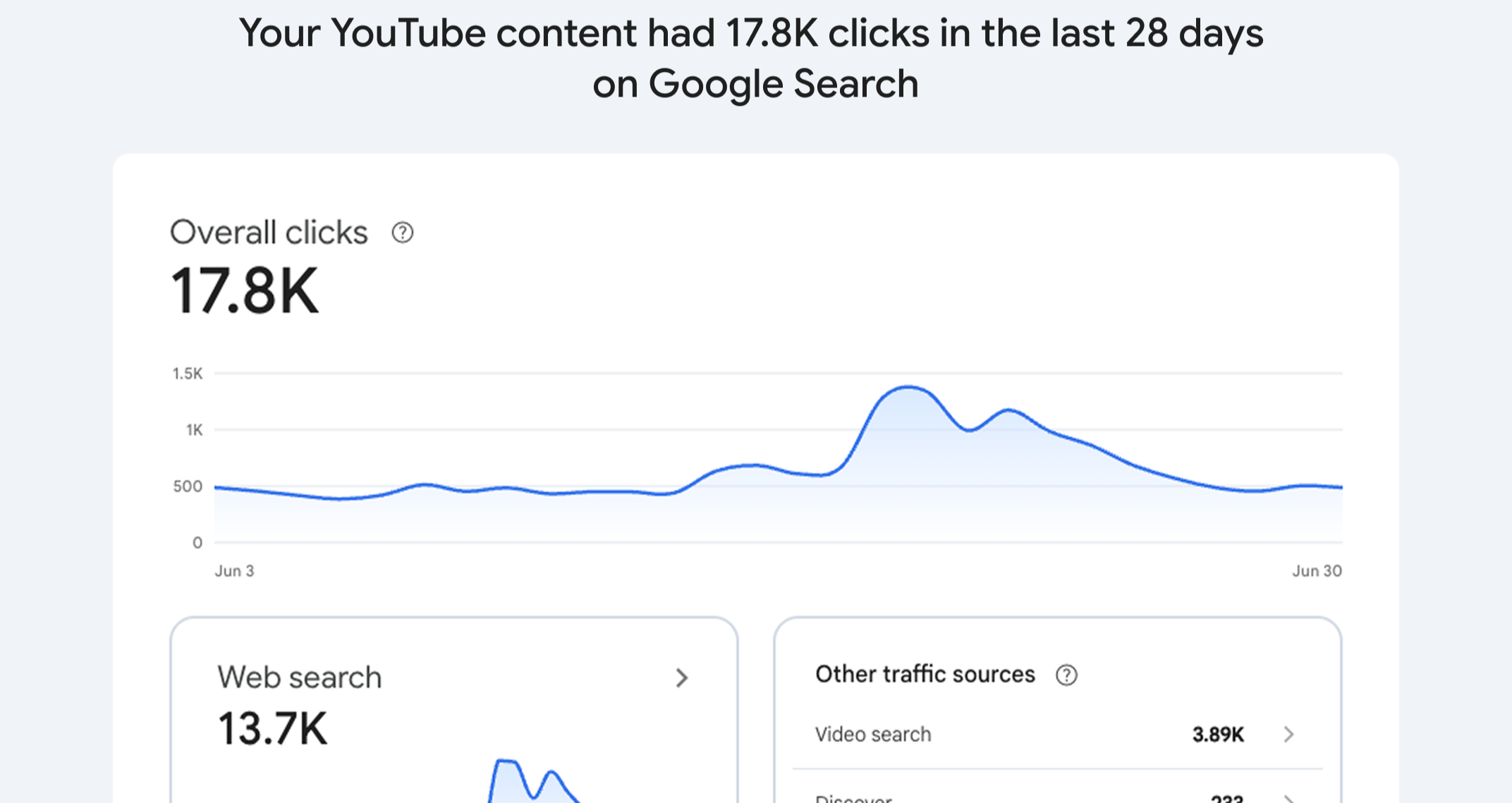
The Performance report includes clicks, impressions and search queries, helping users identify which posts or videos appear most often and which searches lead people to them. The data can also be filtered, sorted and exported.
The Insights report provides a simpler overview of:
- recent traffic trends;
- top-performing posts;
- how users discover the account on Google.
The Achievements report highlights growth milestones, such as reaching a new level of clicks from Google Search.
In practice, an Instagram property can show which posts gain visibility, while TikTok and YouTube properties can reveal which queries lead users to specific videos.
These reports complement native platform analytics, where metrics such as likes, comments, shares, watch time and in-app reach remain available. Together, both sources provide a broader view of content performance, connecting engagement within each platform with how that content is discovered across Google, even though full attribution to a later website visit or purchase remains limited.
How Is This Different From Social Platform Analytics?
Instagram Insights, TikTok Analytics, YouTube Analytics and X Analytics remain essential for understanding engagement within each platform. Search Console Platform Properties introduce an additional layer of analysis by showing how that same content is discovered through Google Search and Discover.
Why This Google Search Console Update Matters for SEO
Social search already influences how people discover products, compare options and look for recommendations. Platforms such as TikTok, Instagram, YouTube and Reddit have become important research environments, especially during the early stages of a purchase journey. The rise of YouTube as a search engine is one of the clearest examples of this shift.
Platform Properties reveal how this behavior also connects back to Google. A video published on TikTok or YouTube can appear for a relevant query, generate impressions and clicks, and lead the user directly to the original platform. Social content may continue attracting organic visibility long after its initial distribution in the feed.
This gives social SEO a more reliable source of search data. Teams can identify
- which topics published on social platforms match existing search demand
- which posts gain visibility for branded and non-branded queries
- which formats continue attracting discovery over time
- which terms people use to find social content
- where posts and videos create additional entry points for the brand
These signals also make Search Everywhere Optimization more practical. The concept describes a search environment in which users move between websites, social platforms, video results, Google Discover and other sources before reaching a decision. Platform Properties now provide direct evidence of how content hosted outside a website performs within part of that journey.
The new era of search is being shaped by AI, multimodal experiences and the growing influence of social and video platforms. As these changes continue to redefine how people discover information, Platform Properties give SEO teams a practical way to observe emerging patterns, understand how discovery behavior is changing and identify new content opportunities across Google Search, Google Discover, Google AI Search, AI search and Generative Engine Optimization (GEO).
What Does This Mean for Ecommerce Brands?
Consider an ecommerce brand that publishes a TikTok video showing how one of its products solves a common customer problem.
The video receives some engagement inside TikTok. It also starts appearing in Google for searches related to that problem.
With a TikTok platform property, the brand may now be able to see:
- how many Google impressions the video received;
- how many users clicked it;
- which queries triggered the result;
- whether its visibility is increasing or declining;
- which other posts from the account are receiving search traffic.
This information creates a stronger connection between content production and organic demand.
If a product demonstration repeatedly appears for a specific query, the brand can consider whether that same subject should be developed across its product page content strategy, collection pages or educational resources.
If several short videos perform well for related searches, the pattern may support a longer YouTube video, a buying guide or a clearer explanation on the product page.
Platform properties do not provide complete ecommerce attribution. They will not automatically show that someone watched a TikTok video, searched for the brand days later and completed a purchase.
They do, however, make the discovery stage more visible. That can improve how ecommerce teams evaluate social content, identify demand signals and coordinate social, SEO and onsite experiences.
How Should Brands Respond to a More Distributed Search Journey?
SEO, social media and content strategy now have more reason to work from the same set of questions. Search data can reveal the language and topics audiences are actively looking for, while social performance can indicate which subjects deserve deeper treatment across videos, landing pages and editorial content.
Planning for discovery beyond the feed also becomes more important. Clear topics, descriptive titles, captions and focused explanations improve the chances that content will be understood and surfaced in search. For YouTube SEO and other video formats, that visibility can continue well after the initial publication cycle.
Consistency across channels remains essential. A user may discover a video through Google, visit the social profile and later reach the website. The positioning, terminology and product information presented across those touchpoints need to reinforce the same message.
Search Console Platform Properties make that connection easier to evaluate. By showing how external content contributes to organic discovery, they give teams a clearer basis for building a stronger SEO strategy, deciding which topics to expand, which formats to prioritize and how Search Everywhere fits into a coordinated search strategy.