



Google’s new AI optimization guide created a useful moment of clarity for ecommerce brands. After months of debate around GEO vs SEO, AEO vs SEO, and the future of AI search optimization, Google made its position public. From Google Search’s perspective, optimizing for generative AI search is still SEO. The company says its AI features rely on core Search ranking and quality systems, including retrieval-augmented generation and query fan-out, to surface information from the Search index.
That does not mean GEO and AEO are meaningless. It means Google is defining these practices from inside Google Search. For brands, the more important takeaway is broader. SEO remains the foundation of visibility, but discovery now happens across a wider ecosystem that includes Google, AI Overviews, AI Mode, ChatGPT, Perplexity, YouTube, Reddit, TikTok, marketplaces, reviews, and communities.
For ecommerce brands aiming to scale, this distinction matters. Visibility is no longer limited to ranking for a keyword and waiting for users to click. A brand now needs to be easy to find, easy to understand, and consistently represented across the places where customers research, compare, validate, and make decisions.
Google Just Made Its AI Search Position Official
The Google AI optimization guide is not a manual full of new shortcuts. It is mostly a reframing of what already matters in SEO. Google says website owners should continue focusing on foundational SEO best practices, valuable content, clear technical structure, crawlability, indexation, and page experience. The guide is specifically written for site owners who want to understand how to succeed in generative AI features such as AI Overviews and AI Mode.
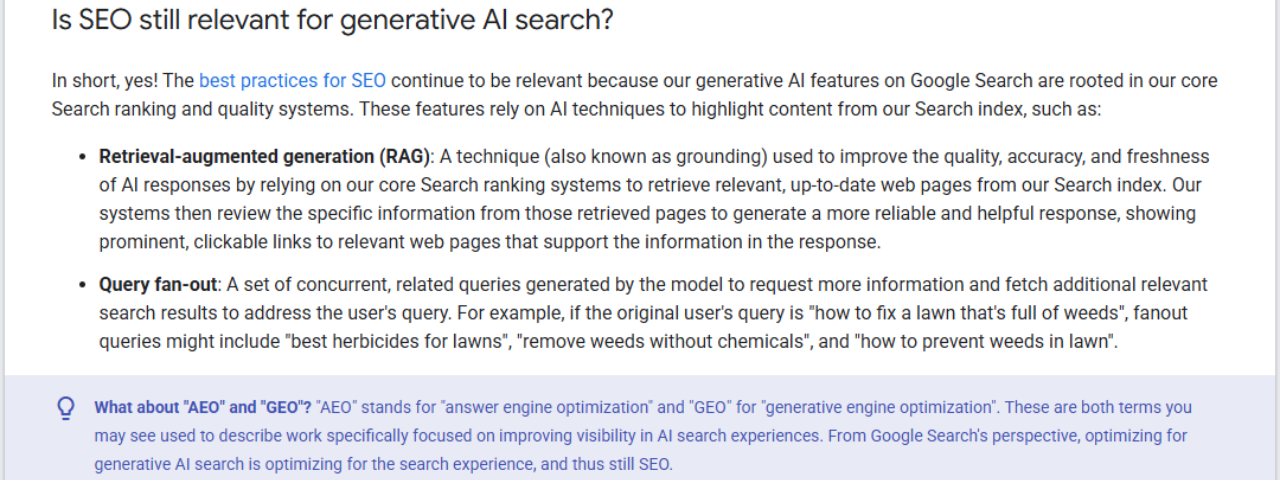
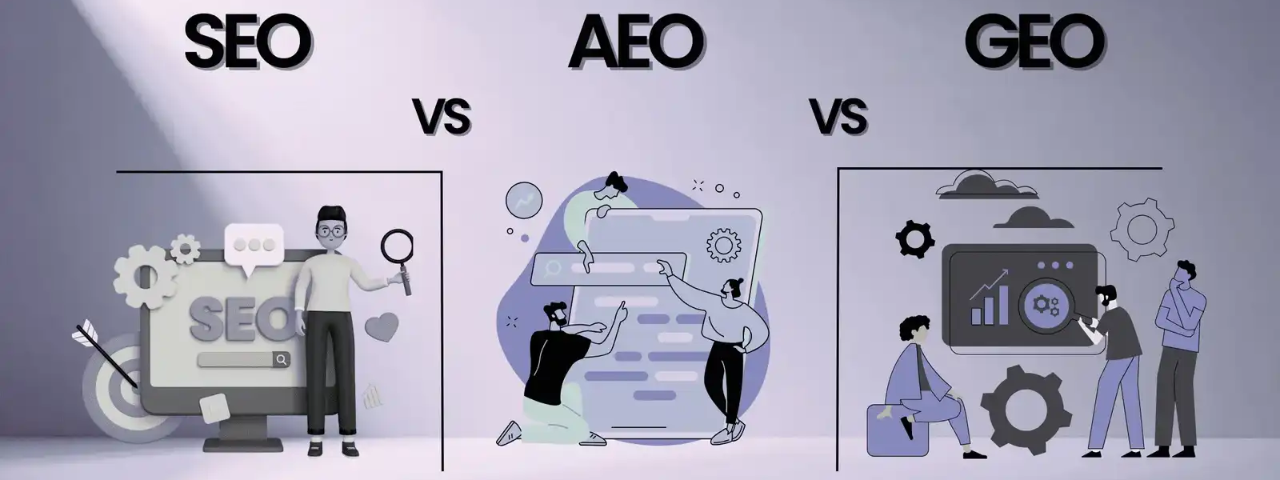
This is important because the AI Search conversation has been filled with new labels. AEO, GEO, LLMO, AI SEO, AI Overview optimization, and other terms have been used to describe different versions of the same concern, which is how brands can be seen when answers are generated instead of listed. Google’s answer is direct. For Google Search, these practices still sit under SEO.
Why Google Says GEO and AEO Are Still SEO
Google defines AEO as answer engine optimization and GEO as generative engine optimization. It then states that, from its own perspective, optimizing for generative AI search is optimizing for the search experience, which makes it SEO. Search Engine Journal summarized the same point, noting that Google’s new guide treats AEO and GEO as part of SEO rather than separate disciplines for Google Search.
This makes sense for Google. Its generative search experience is built on Search infrastructure. If AI Overviews use pages from Google’s index, then the basics still matter. Content must be accessible. Pages must be eligible to appear. The site needs a technical structure that search systems can process. The information needs to be reliable enough to support an answer.
Why This Statement Matters for Brands
For ecommerce leaders, the implication is practical. AI Search should not push teams into abandoning SEO strategy. It should push them to improve the quality of their SEO.
A Shopify brand with weak architecture, thin collection pages, duplicate product content, slow templates, missing product data, and unclear internal linking will not solve its visibility problem by creating an llms.txt file or rewriting blog posts for AI. The same technical and content issues that limit organic growth also limit eligibility for AI-driven search experiences.
What Google Says You Should Stop Doing
According to Google, brands do not need to prioritize tactics such as:
- Creating llms.txt files as if they were a requirement for AI visibility.
- Breaking content into artificial chunks only to make it easier for language models to process.
- Rewriting pages exclusively for LLMs instead of improving usefulness for real users.
- Chasing synthetic mentions or low-quality references across the web.

Manipulating AI Responses Is Becoming a Spam Risk
Google has also updated its spam policy language to include attempts to manipulate generative AI responses in Search. The Verge reported that Google’s spam policy now refers to tactics designed to manipulate AI Overview or AI Mode responses, and that sites using those tactics can face penalties such as lower rankings or removal from results.
This is a signal for brands and agencies. AI visibility cannot be built through recommendation poisoning, fake best-of lists, synthetic mentions, or mass-produced pages designed only to influence a model. The future of SEO for AI Search will reward brands that build real signals of authority, not brands that try to manufacture shortcuts faster than platforms can detect them.
What Still Works According to Google
Helpful, Original Content With Real Perspective
For ecommerce brands, useful content usually comes from information only the brand, its customers, or its team can provide, such as:
- Product comparisons based on real use cases.
- Sizing, material, or compatibility guidance.
- Customer objections collected from support and sales conversations.
- Category education that helps shoppers choose between options.
- Demonstrations, before-and-after examples, or product usage scenarios.
- Insights from reviews, returns, FAQs, and post-purchase feedback.
Technical SEO Still Powers AI Visibility
Technical SEO remains central because Google’s AI systems depend on content that can be found, processed, indexed, and shown. Google states that technical clarity helps ensure content is ready for discovery and indexing, and that pages must be indexed and eligible to appear in Search with a snippet to be eligible for generative AI features.
For Shopify brands, this includes site speed, mobile performance, crawlable templates, clean collection structures, canonical logic, redirect management, image optimization, schema markup, and internal linking.
Visual Content, Product Data, and Structured Signals Matter
Google also states that relevant images and videos can appear in generative AI search features, creating opportunities beyond traditional web page links.
For ecommerce, this is especially relevant. Product images, usage videos, comparison visuals, review content, product feeds, Merchant Center data, pricing, availability, shipping details, return policies, and structured data all help search systems understand the commercial offer. Structured data may not be required for generative AI search, but Google still recommends using it as part of an overall SEO strategy because it supports rich results eligibility.
How Google Says AI Search Actually Works
Retrieval-Augmented Generation Connects AI Answers to the Search Index
Retrieval-augmented generation, often called RAG, means the system retrieves relevant information before generating an answer. Google explains that its generative AI features use core ranking systems to retrieve relevant, up-to-date pages from the Search index, then use information from those pages to support responses.
This is why ranking still matters. If a site has poor visibility in the index, it has fewer opportunities to support AI-generated answers.
Query Fan-Out Expands a Single Search Into Multiple Related Searches
Google also explains query fan-out. A single user query can trigger multiple related searches in parallel so the system can gather broader information.
For content strategy, this changes the assignment. A page should not be built only around an exact-match keyword. It should cover the topic with enough depth to answer related questions, adjacent concerns, and different search intents. A collection page, for example, may need buying guidance, comparison logic, product attributes, FAQs, internal links, and supporting content to help systems understand the full context.
Ranking Still Matters, But It Is Not the Whole Story
Traditional ranking is still important, but AI visibility also depends on interpretation. AI systems evaluate how clear, useful, and trustworthy information appears within a broader context.
This is where the debate around GEO vs SEO becomes more useful. SEO helps a page become discoverable and credible within search systems. GEO helps teams think about how that information may be cited, summarized, compared, or transformed inside generative experiences.
Search Is No Longer Only Google
Today, customers may discover, validate, and compare brands across environments such as:
- Google Search and AI Overviews.
- YouTube reviews and tutorials.
- Reddit discussions and community threads.
- TikTok search and short-form discovery.
- ChatGPT, Perplexity, Gemini, and other AI assistants.
- Marketplaces, comparison sites, and product review platforms.
Google Is Defining Search From Google’s Perspective
Google’s guide is valuable because it clarifies what works inside Google Search. It does not fully answer how a brand earns visibility inside ChatGPT, Perplexity, Reddit discussions, YouTube recommendations, marketplace search, or social discovery.
This is the limitation of reading the guide too narrowly. Google is correct about its own ecosystem. Brands still need a broader visibility strategy.
This Is Where Search Everywhere Optimization Comes In
Search Everywhere Optimization is the strategic response to distributed discovery. It does not replace SEO. It expands the scope of SEO into every relevant environment where customers search for answers.
For ecommerce brands, this means aligning site content, product data, reviews, marketplace presence, social content, community visibility, video education, and PR signals. The goal is to create a consistent and credible brand presence across the discovery ecosystem.
Why GEO Still Matters, Even If Google Doesn’t Like the Term
Ranking Is Not the Same as Being Cited, Summarized, or Recommended
A brand can rank, but still fail to be cited in an AI-generated answer. It can also be mentioned in a comparison even when the user never clicks a traditional result. Search Engine Land defines GEO as the practice of structuring content and digital presence so AI-powered search platforms can retrieve, cite, and recommend a brand when answering user questions.
That definition is useful because it shifts attention from rankings alone to presence inside generated responses.
AI Platforms Do Not All Work the Same Way
Google AI Overviews, Gemini, ChatGPT, Perplexity, Claude, Copilot, and marketplace search systems do not behave identically. They use different data sources, retrieval methods, partnerships, citations, browsing capabilities, and interface patterns.
This is why Generative Engine Optimization still has value as a planning layer. It helps brands ask whether they are understandable outside their own website.
GEO Expands SEO Into Generative Environments
The most useful interpretation is simple. GEO does not replace SEO. It extends SEO principles into environments where answers are generated, compressed, and interpreted.
That makes GEO a layer inside Search Everywhere Optimization. SEO builds the foundation. GEO helps brands prepare for generative answers. AEO helps teams structure information for direct answers. Search Everywhere connects the full journey.
What Brands Should Actually Focus on Now
Build a Strong SEO Foundation First
Brands should begin with technical clarity, indexable content, site architecture, internal links, clean product data, structured signals, and page experience. Without those elements, AI visibility becomes a weak target.
Create Experience-Driven, Non-Commodity Content
Content should come from real knowledge. For ecommerce, that includes product expertise, customer questions, comparison logic, material education, category guidance, reviews, use cases, and buying objections.
This kind of content supports organic rankings, AI Overview optimization, and conversion quality because it gives users useful context before they make a decision.
Maintain Semantic Consistency Across Platforms
Semantic consistency means the brand should describe its core information clearly across every relevant touchpoint, including:
- Website pages and product descriptions.
- Collection pages and buying guides.
- YouTube videos and social content.
- Marketplace listings.
- Reviews, PR mentions, and comparison articles.
- Community discussions and support content.
Build Discoverability Beyond Google
Search Everywhere Optimization asks a direct question. Where do your customers actually search before buying? The answer may include Google, but it rarely ends there.
For scaling ecommerce brands, the opportunity is to build a presence that travels with the user across the journey.
It Is Still SEO, But SEO Is No Longer Confined to Google
Google is right that AI Search still depends on SEO foundations. The market is also right to recognize that discovery has become an ecosystem.
The strongest strategy is not choosing between AEO vs SEO, GEO vs SEO, or Search Everywhere Optimization. The strongest strategy is understanding how they connect. SEO makes the brand accessible and credible. AEO improves answer readiness. GEO prepares the brand for generative environments. Search Everywhere ensures the brand is present wherever customers search, compare, and decide.
Conclusion
The Google AI optimization guide should not make ecommerce brands slow down their AI Search strategy. It should make that strategy more disciplined.
The brands that win will not be the ones chasing every new acronym. They will be the ones building technically strong, content-rich, semantically consistent, and conversion-ready ecosystems. For ecommerce brands aiming to scale, that is the practical future of SEO. It remains grounded in Google, but it now has to work far beyond Google.