




Search has changed significantly in recent years, but the fundamentals behind visibility haven’t disappeared. Traditional SEO techniques still determine whether a page is relevant, technically sound, and trustworthy enough to appear in search results at all.
What has changed is how search engines and AI systems interpret information. They now rely on structured signals to understand context, relationships, and meaning at scale.
This is where schema markup becomes essential. It does not replace core SEO and it does not guarantee rankings. Instead, schema creates a predictable layer of interpretation that helps machines understand what a page represents.
As AI systems expand their influence across results, recommendations, assistants, and summaries, structured data becomes a bridge between content and how those systems extract value from it.
Understanding this distinction is the key to modern SEO. Schema clarifies. SEO ranks. Both are necessary for visibility in a landscape increasingly shaped by AI-driven models.
What Traditional SEO Techniques Are (and Why They Still Matter)
Traditional SEO continues to be the operational foundation of organic visibility. It provides the signals search engines use to determine whether a page should rank, how it should rank, and for which intents it is relevant.
Without these fundamentals, schema markup has limited value because structured data can only reinforce meaning; it cannot invent authority or relevance where none exists.
On-Page SEO: Content, Structure, and Relevance
On-page work focuses on how well content aligns with search intent. Strong alignment starts with effective keyword analysis, ensuring each page targets the correct intent.
Titles, headings, semantic organization, and internal links all contribute to how search engines evaluate a page.
This is especially relevant for ecommerce, where product page enhancements improve clarity and intent-matching.
High-quality content remains the core determinant of relevance. Schema can enhance the interpretation of this content, but it cannot compensate for information that is thin, misaligned, or unclear.
Technical SEO: Indexing, Performance, and Architecture
Technical SEO establishes the conditions that allow search engines to access and evaluate a site. If these foundations fail, even strong schema markup loses effectiveness.
- Indexing control
Ensures the right pages are crawled and included in search results through clean sitemaps, correct canonicals, and proper robots rules. - Performance
Fast, stable pages are easier for search engines to render and tend to be crawled more reliably, making page speed optimization a core requirement for technical SEO. - Mobile experience
Mobile-first evaluation requires layouts that load predictably and maintain strong mobile usability across devices.
- URL and site structure
Clear hierarchies help search engines understand relationships between pages and move through the site efficiently, which is why site architecture for SEO has such a strong impact on crawlability and long-term visibility.
Technical SEO removes friction. When a site is easy to crawl and interpret, every other SEO effort becomes more effective.
Off-Page SEO: Authority and Trust
Off-page SEO signals help search engines judge whether a site is credible enough to deserve visibility. High-quality backlinks, brand mentions, reviews, and press coverage act as external confirmations that a source is reliable.
These signals are difficult to manipulate, which is why they remain central to ranking competitive queries. Strong authority often determines which sites rise above others when content quality is comparable.
Building this authority also depends on how trustworthy your store appears to users, which is one of the most overlooked factors in ecommerce SEO and a common cause of stalled organic growth.
Schema markup interacts with this indirectly. It cannot create authority, but authoritative sites see greater benefit from structured data because search engines are more willing to display enhanced results when the underlying source is trusted.
What Schema Markup Is (In Simple Terms)
Schema markup is structured data that describes a page’s content in a way machines can interpret without ambiguity. It adds semantic clarity to information that humans understand intuitively but search engines must deduce through patterns.
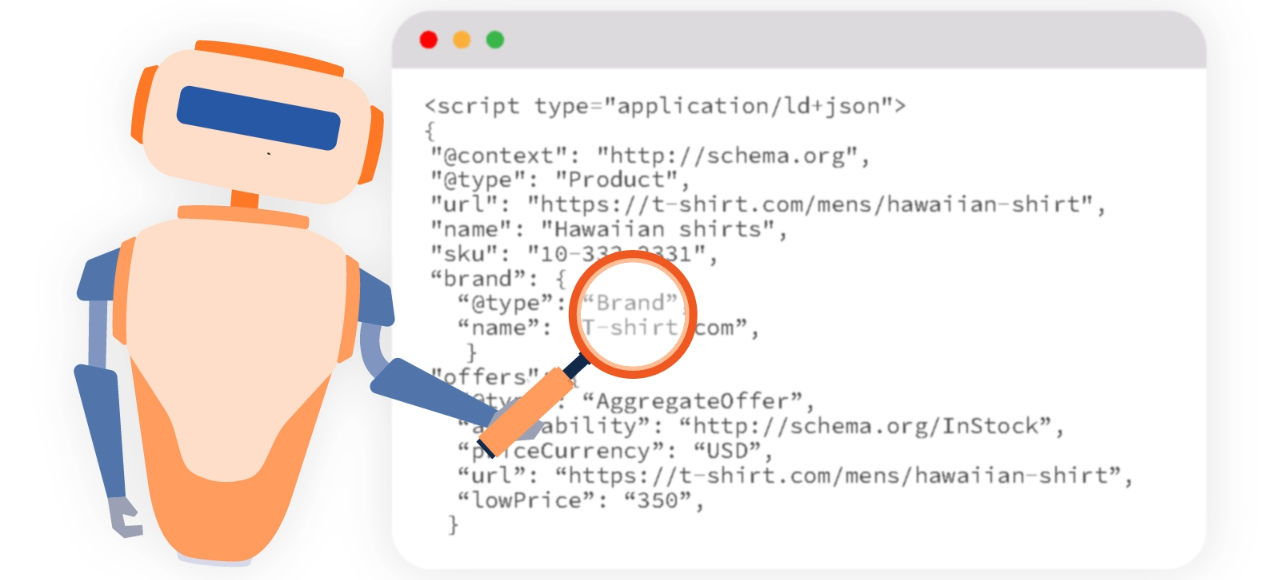
This clarity becomes essential as AI-powered SEO automation increasingly depends on clean, structured signals to evaluate and reuse content accuratey, making schema markup basics an important foundation for modern SEO.”
Structured Data as a Language for Machines
Structured data organizes content into a predictable format that search engines and AI systems can parse.
Rather than relying solely on text, schema expresses meaning through standardized properties that explain what something is, how it relates to other information, and why it matters.
What Users See vs. What Machines Understand
A product page may be clear to a human and still ambiguous to a machine. Without structured data, search engines must infer relationships between the title, description, price, and reviews. Schema removes the guesswork by explicitly defining these elements.
The Most Common Schema Types in Practice
Structured data is most effective when it matches the real purpose of a page.
In practice, the most used types include Product, Review, FAQ, Article, Event, and Breadcrumb schema. Each provides explicit information that helps search engines interpret content without relying on assumptions.
Product schema clarifies pricing and availability. Review schema identifies quality signals. FAQ schema highlights question-and-answer formats. Article schema defines authorship and publishing details. Breadcrumbs help map a page’s position within the site.
These markup types give search engines a precise understanding of what a page represents and how it should be displayed.
Traditional SEO vs. Schema Markup: What’s the Real Difference
Traditional SEO determines if a page deserves to rank. Schema markup helps search engines interpret and present that page accurately. Together, they support both visibility and clarity.

SEO Evaluates Relevance; Schema Explains Meaning
Traditional SEO focuses on demonstrating that a page matches user intent. Content quality, keyword alignment, internal linking, and technical foundations all contribute to how search engines evaluate relevance.
Schema markup operates on a different dimension. It adds semantic meaning, describing the entities on a page so machines do not need to infer relationships through pattern recognition alone.
Schema is effective because it reduces ambiguity. Where traditional SEO says “this page is relevant to a topic,” schema clarifies “this page is a product,” “this is the price,” and “this is the review rating.” Both layers are essential because relevance alone is not enough for accurate interpretation, and meaning alone cannot compensate for weak content or structure.
Rankings vs. Interpretation and Presentation
Schema does not change ranking signals, but it influences how search engines display and reuse information.
Ranking is still driven by traditional SEO factors such as content depth, architecture, and authority. Schema affects interpretation and presentation, especially in environments where search engines need explicit, structured information.
This is where schema creates measurable gains:
- Enhanced search results that highlight key information
- Clearer signals for AI systems that generate answers
- Increased likelihood of appearing in rich features
- More predictable extraction of product and review data
Schema improves visibility by shaping how information is understood, not where it ranks. The two approaches are complementary: SEO earns the position, and structured data strengthens how that result is perceived and consumed.
The Real Impact of Schema Markup in Search
Schema’s influence becomes especially visible in modern SERPs, where enhanced displays attract more qualified clicks.
Rich Snippets and Enhanced Results
Structured data enables elements such as star ratings, pricing, availability, FAQs, and other enriched visual details that help users interpret a result more quickly.
When Schema Increases CTR Without Changing Rankings
A result in position three with review stars and pricing often receives more clicks than a plain result in position two. Schema improves presentation, which can directly improve click-through rate even when rankings remain unchanged.
Schema Markup in the Context of AI Search
The shift toward AI-driven search expands the role of structured data far beyond traditional rich results.
How AI Models Consume Structured Data
AI systems read text, metadata, and schema markup together to understand a page. Structured data reduces ambiguity and helps models identify key entities and attributes quickly.
In ecommerce, where product details and availability must be explicit, strong structured data SEO gives AI a clear path to accurate extraction instead of relying on assumptions.
Schema, Citations, and Direct Answers
Generative engines depend on clear semantic signals when selecting sources for summaries, recommendations, and direct answers. Schema markup increases the likelihood that a page will be recognized as a trustworthy, structured source for a specific topic.
When information is consistently tagged, AI systems can attribute answers more confidently, improving the chances of being cited in AI Overviews, shopping results, or conversational search outputs. This is one of the most practical schema markup benefits in the current search environment.
Schema as a Pillar of Search Everywhere Optimization
Modern SEO techniques now extend beyond Google’s core results. Visibility also depends on how well content is understood across assistants, voice interfaces, marketplace search, and AI-driven discovery layers.
In a search-everywhere ecosystem, schema markup ensures that content is interpreted consistently across Google, social platforms, assistants, and AI interfaces, making it discoverable regardless of where the search begins.
In these contexts, keyword signals matter less than structured meaning. Schema markup provides the clarity needed for consistent interpretation in environments where search engines do not read pages the same way humans do.
It becomes a foundational element for SEO for AI search, ensuring content remains usable and discoverable wherever machine-driven search is happening.
Where Schema Markup Makes the Biggest Difference (and Where It Doesn’t)
Schema markup delivers the most value on pages with structured, detailed information. Product data, reviews, and FAQs see the strongest impact, while weaker content gains little from it.
Cases Where Schema Is Critical
Product data, reviews, FAQs, events, recipes, and editorial content with rich attributes benefit significantly from structured data. These formats align directly with the expectations of enhanced SERP features and AI systems that prefer structured inputs.
When Schema Alone Isn’t Enough
Schema markup adds clarity, but it cannot fix foundational weaknesses. Pages with thin content, poor technical performance, or limited authority will not gain visibility simply because structured data is present.
Search engines need relevance, depth, and trust signals before schema can influence how a page is interpreted or displayed. Schema enhances strong pages; it cannot elevate pages that do not meet baseline SEO standards.
SEO, Schema, and Conversion Working Together
Clearer search results support user decision-making. When expectations are properly aligned before a click, engagement improves and friction decreases. Schema contributes by making information easier to interpret at a glance, while SEO ensures the content behind those enhanced results fully satisfies intent. Together, they create a smoother path from discovery to conversion.
Their combined impact becomes clear in areas such as:
- Higher-quality clicks driven by more informative previews
- Reduced bounce rates when the page matches what the snippet promises
- Stronger conversion paths because users arrive with accurate expectations
SEO establishes relevance and experience. Schema enhances visibility and interpretation. Together, they create a more predictable journey from discovery to conversion.
Common Mistakes When Using Schema Markup
Several recurring mistakes reduce the effectiveness of structured data. The most common include:
- Adding schema to weak or thin content
Structured data cannot create relevance or authority. If the page lacks depth or fails to satisfy intent, schema adds little value. - Implementing markup that does not match the page
Misaligned or inaccurate schema confuses search engines and can lead to ignored or invalidated markup. - Reusing generic templates without adjustment
Copy-paste implementations often include properties that do not apply, creating inconsistencies between the markup and the actual content. - Overmarking or exaggerating information
Adding optional fields that do not genuinely exist on the page may trigger validation errors or reduce trust in the markup. - Expecting schema to improve rankings on its own
Schema affects interpretation and presentation, not ranking signals. Without strong SEO fundamentals, its impact is limited.
These errors undermine the purpose of structured data, which is to provide clear, reliable signals that reinforce well-optimized content.
Conclusion
Traditional SEO techniques remain responsible for rankings, authority, and the evaluation of relevance. Schema markup strengthens these efforts by organizing meaning and creating a machine-readable layer that supports accurate interpretation and more effective presentation in both traditional and AI-driven search environments.
Brands that want to build long-term visibility benefit from investing in strong Shopify SEO services, where structured data and technical foundations work together to support search performance across evolving platforms.