




Most ecommerce owners treat the blog as institutional content. It becomes a space for brand updates, occasional SEO posts, or educational material that sits outside the core growth engine. The store runs on paid media, retention flows, promotions, and product optimization. The blog exists, but it is not integrated into the revenue structure.
This separation creates dependency. When acquisition is concentrated in paid channels, growth is directly tied to budget allocation and auction dynamics.
If paid campaigns are paused, demand generation slows down immediately. Customer acquisition cost (CAC) becomes volatile, forecasting becomes harder, and margin pressure increases.
In this context, discussions around ecommerce blogging benefits should focus on risk distribution and cost structure rather than content production.
The relevant question is simple. If paid ads were paused, would organic content continue to bring qualified traffic with purchase intent. If the answer is no, the company does not own a stable acquisition layer. It rents attention.
Using Your Blog to Build Acquisition Leverage
Traffic is a consequence. Leverage is the strategy.
A blog for an ecommerce store is an owned media channel. It is not subject to auction pressure like paid ads. It is not throttled by cost per mille (CPM) volatility. It is not dependent on a daily budget.
When structured correctly, it becomes:
- A compounding asset that accumulates authority
- A dependency reducer for paid acquisition
- A foundation that lowers marginal acquisition cost over time
In an ecommerce content strategy focused on growth, the goal is not to “attract visitors.” The goal is to build a system that captures demand consistently without paying for every click.
The Asset Most Ecommerce Stores Underestimate
Many ecommerce businesses treat the blog as a secondary initiative. Content is published irregularly, often when time allows. Topics are selected based on intuition, trending themes, or competitor activity rather than structured search demand and commercial relevance. In most cases, there is no clear connection between content production and revenue performance.
The outcome is predictable.
An unfocused blog generates generic traffic with limited purchase intent. It increases sessions and impressions, but does not materially affect revenue, CAC, or lifetime value (LTV).
A strategic blog operates differently. It is built around search intent and aligned with the buying journey. It targets queries that reflect commercial investigation, product comparison, and category-level interest. Educational content is systematically connected to product and category pages through deliberate internal linking.
In this way, SEO content for online stores strengthens commercial visibility rather than existing in isolation.
The reason many owners underestimate the blog is not performance, it is measurement. Pageviews are monitored instead of acquisition efficiency. Rankings are tracked instead of influenced revenue. Content is categorized as a marketing output rather than as part of the company’s growth infrastructure.
Why Paid Traffic Alone Creates Fragility
Paid media is an effective growth lever, but it becomes structurally fragile when it is the sole driver of acquisition.
Exclusive reliance on paid traffic introduces several risks:
- CAC volatility driven by auction competition
- Continuous margin pressure as costs increase
- Exposure to algorithm and platform policy changes
- Immediate revenue stagnation when budgets are reduced
In this context, blogging for ecommerce growth functions as a stabilizing force. Organic content captures ongoing demand from users actively searching for solutions. As organic contribution increases, the percentage of revenue dependent on paid spend decreases. This improves blended CAC and reduces exposure to short-term fluctuations in advertising costs.
The objective is not to eliminate paid media. Instead, it is to build a complementary acquisition engine that enhances resilience and long-term predictability.
Content as Compounding Growth
Paid campaigns stop producing results when investment stops. Content continues to generate visibility and demand after publication.
A well-structured blog gradually accumulates authority signals such as backlinks, indexation depth, topical relevance, and brand recognition. Over time, behavioral data reinforces search performance, and internal linking strengthens the ranking potential of commercial pages.
This creates a compounding effect. A single article may have limited impact, but a portfolio of strategically aligned content forms an ecosystem that supports acquisition at scale. As coverage expands across high-intent and mid-intent queries, organic visibility increases in a way that is difficult for competitors to replicate quickly.
As this ecosystem matures, the effective cost per organic acquisition decreases. That reduction is not a short-term tactical gain; it is a structural advantage that improves margin efficiency and strengthens long-term growth capacity.
How Blogging Reduces Customer Acquisition Costs
Talking about ecommerce blogging benefits without connecting them to CAC is incomplete.
Organic content reduces CAC because it captures existing demand. Instead of paying to create attention, you position your brand where intent already exists.

Ranking for High Intent Searches
High intent searches include comparative queries, problem solution searches, and product specific research. Users typing these queries are already in evaluation mode.
When your blog ranks for these terms, you intercept buyers close to decision. You do not need to generate interest from scratch. You capture it.
Achieving this visibility depends on structured keyword analysis for ecommerce aligned with commercial intent.
The organic cost per acquisition in this scenario is significantly lower than paid media over time. Once content is ranked, each additional visitor does not increase cost proportionally.
Supporting Branded and Non Branded SEO
A strategic blog strengthens both non branded and branded search.
On the non branded side, it increases visibility for educational and category level terms. On the branded side, it reinforces your authority, increasing the likelihood that users search directly for your brand after consuming content.
This reduces the need to defend branded keywords aggressively in paid search. When your organic presence is strong, paid spend on defensive terms becomes more efficient.
In practical terms, a strong ecommerce content strategy increases share of search. Share of search correlates with market share over time.
Increasing Quality Score and Ad Efficiency
Few founders connect content marketing for ecommerce with paid media efficiency.
A blog improves semantic relevance across the domain. It increases time on site, depth of navigation, and contextual signals. It strengthens internal linking structures that connect informational and commercial pages.
These elements can contribute to higher Quality Scores in paid search, better landing page experience, and potentially lower cost per click (CPC). Even small reductions in CPC, multiplied by scale, have direct impact on blended CAC and margin.
Content does not compete with paid media. It improves it.
Blogging Increases Conversion (Even When It Doesn’t Sell Directly)
Attribution models frequently undervalue content because they prioritize last click transactions. When a blog post does not generate immediate sales, it is labeled as low impact. This view ignores how purchase decisions are actually formed.
Conversion is rarely the result of a single interaction. It is built through accumulated information, comparisons, and perceived trust. Content influences this process before the user reaches a product page.

Educated Customers Convert Better
Strategic content reduces uncertainty early in the journey. It explains use cases, compares alternatives, clarifies limitations, and sets expectations. By the time a user lands on a high-converting product page, much of the evaluation work has already been done.
The impact is measurable. Users who consume relevant content tend to arrive with clearer intent and fewer objections. This typically leads to
- Higher conversion rates
- Lower return rates
- Fewer support requests
- Greater confidence in the purchase decision
When expectations are aligned with the offer, post purchase friction declines. This improves not only conversion rate, but also operational efficiency and margin stability.
Building Authority Before the Click
Many purchase decisions are shaped before the user interacts with a transactional page. Educational and comparative searches define what criteria matter and which brands appear credible.
Consistent visibility in these searches strengthens perceived expertise. Repeated exposure increases familiarity. Familiarity reduces perceived risk. As perceived risk declines, sensitivity to price differences often declines as well.
Customers who trust a brand rely less on discounts as the primary decision factor. This dynamic is reinforced by strong trust signals in ecommerce that reduce perceived risk.
Internal Linking That Supports Product Pages
A strategic blog functions as part of a coordinated SEO architecture. Informational articles are intentionally connected to relevant category and product pages through contextual internal links.
This structure helps transfer authority across the site, reinforce commercial keyword relevance, and increase organic visibility where revenue is generated. Product pages benefit from the accumulated strength of supporting content.
In this model, the blog is not a separate editorial section. It operates as an integrated layer that supports rankings, discovery, and conversion performance across the store.
Blogging Strengthens Brand Positioning
Brand positioning has a direct impact on margin. When a brand is perceived as a reference in its category, it operates under different economic conditions than a brand seen as interchangeable.
Owning the Conversation in Your Niche
Brands that consistently publish educational and analytical content influence how customers think about a category. They introduce frameworks, define terminology, and clarify evaluation criteria. Over time, these elements shape expectations.
When your store becomes a recurring source of insight in your niche, your framing of the problem and solution gains traction. Customers begin to evaluate products through the lens you helped establish. This affects perceived value long before they compare prices.
Influence over evaluation criteria translates into influence over positioning. Positioning influences margin.
Controlling the Narrative Around Your Category
If you do not actively educate the market, someone else will. Review sites, influencers, and competitors will define what matters.
In that environment:
- Comparison becomes feature driven
- Differentiation narrows
- Price becomes the dominant lever
A strategic blog allows you to reintroduce context. You can explain what actually drives performance, durability, results, or long term value. You can surface dimensions that align with your product strengths and de-emphasize superficial comparisons.
When customers understand how to evaluate correctly, average order value tends to increase and discount pressure decreases.
Creating Differentiation Beyond Product Specs
Product features can be replicated. Suppliers overlap. Manufacturing advantages erode. Technical specifications alone rarely sustain long term differentiation.
Authority, depth of explanation, and consistency of narrative are more difficult to copy. A strategic blog builds accumulated credibility over time. It creates familiarity with your brand voice, standards, and expertise.
As preference develops, competitive dynamics shift. Customers who trust and identify with a brand are less likely to switch based solely on minor price differences. Reduced price sensitivity lowers discount pressure and stabilizes margins.
Blogging Supports Retention and LTV
Most discussions around ecommerce blogging benefits focus almost exclusively on acquisition. That leaves out a large portion of the financial impact. Lifetime value is determined not only by how efficiently you acquire customers, but by how effectively you help them succeed with your product and expand their relationship with your catalog over time.
Content plays a structural role in this process because retention is strongly linked to product understanding, correct usage, and continued relevance.
Post Purchase Education Content
After the first purchase, many brands reduce communication to transactional emails and promotional campaigns. This leaves a gap between product delivery and successful product adoption.
Educational content closes that gap. Detailed guides, usage tutorials, comparison breakdowns, and scenario based examples improve how customers use the product. Proper usage has measurable consequences:
- Fewer misunderstandings about features or limitations
- Lower return rates due to incorrect expectations
- Reduced support volume and operational cost
- Higher product satisfaction scores
When customers extract full value from what they bought, perceived return on investment (ROI) increases. That perception directly affects repeat purchase probability. Retention improves not because of emotional branding language, but because the product works as expected and the customer knows how to use it correctly.
In categories with technical products, supplements, beauty routines, equipment, or configurable items, post purchase education can materially reduce churn and refund rates. That alone has direct margin impact.
Content for Upsell and Cross Sell
Lifetime value increases when customers expand across categories, upgrade to higher value products, or purchase more frequently. Content can guide this expansion logically instead of relying only on algorithmic recommendations or discount driven upsells.
Strategic guides can explain how products work together, when an upgrade becomes necessary, and how usage evolves over time. This creates a progression model. Instead of presenting cross sell suggestions as isolated offers, the brand positions additional products as the natural next step in a broader system.
For example, a brand selling home equipment can publish optimization guides that naturally introduce accessories. A beauty brand can develop structured routines that move customers from entry level products to advanced treatments. In both cases, content provides context. Context increases acceptance and reduces resistance to higher ticket purchases.
When expansion is framed as functional improvement rather than sales pressure, average order value and cross category penetration tend to rise with less reliance on discounts.
Building Community Through Education
Retention is strongly correlated with continued engagement. If the brand disappears after checkout, the relationship becomes transactional. When communication is limited to discounts, purchase timing becomes promotion driven.
Recurring educational content keeps the brand relevant between purchases. This can include advanced use cases, industry insights, maintenance best practices, seasonal adjustments, or new application scenarios.
Consistent exposure achieves three operational outcomes:
- Maintains mental availability between purchase cycles
- Reinforces product value after initial excitement fades
- Creates additional entry points for future transactions
Over time, this increases purchase frequency and stabilizes revenue per customer. LTV grows because the relationship extends beyond the initial conversion and is supported by continuous value delivery.
When evaluated properly, blogging for ecommerce growth influences not only acquisition metrics, but retention rate, refund rate, support cost per order, cross category penetration, and revenue per customer. These are financial levers, not branding abstractions.
Blogging as an AI and Search Visibility Strategy
Search behavior has changed. AI generated answers, chat based interfaces, and marketplace algorithms now mediate discovery.
Appearing in AI Generated Answers
AI driven engines rely on clear, well organized content to generate responses. They prioritize sources that demonstrate topical depth, semantic consistency, and contextual relevance. Brands that publish structured educational material across their category increase their likelihood of being referenced or indirectly surfaced within these systems.
When content lacks depth or organization, the brand is effectively excluded from these answer layers. Visibility in AI environments is a direct extension of strong SEO content for online stores. It requires clarity, coherence, and coverage of real customer questions at different stages of intent.
Structuring Content for Modern Search Behavior
Search queries have evolved toward more complex, intent driven questions. Users expect complete explanations that address context, trade offs, and practical application. Pages built around isolated keywords no longer meet this expectation.
Modern SEO depends on structure, depth, and alignment with real decision processes. A strategic blog organizes content around themes and subtopics that reflect how customers think. It connects related concepts, reinforces internal relevance, and builds topical authority over time. This increases the probability of ranking not only for primary terms, but for clusters of related queries.
The Future of Organic Discovery
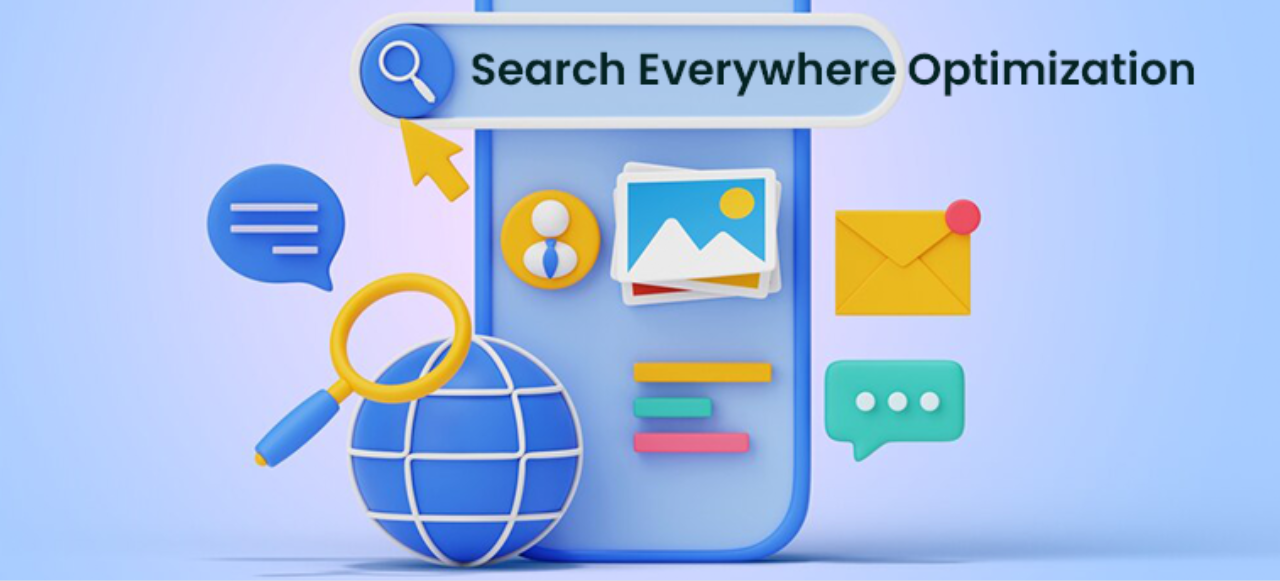
Organic visibility now extends beyond traditional search engines. Platforms such as YouTube, Pinterest, marketplaces, social search features, and AI assistants all function as discovery channels. Each of these systems relies on structured information to interpret and distribute content.
A well organized blog serves as a central knowledge base that can be adapted across formats. Articles inform video scripts, product descriptions, buying guides, and social content. Instead of creating disconnected assets for each platform, the brand builds a core repository of expertise that supports distribution everywhere else.
In this model, blogging is not limited to ranking on Google. It becomes a foundational layer for visibility across the broader search and AI ecosystem.
Why Most Ecommerce Blogs Fail
Many ecommerce blogs fail because they are not built as part of a growth system. They operate as publishing initiatives instead of revenue infrastructure. Content is produced, but it is not structurally connected to how the business acquires and monetizes customers.
Publishing Without Strategy
Publishing consistently does not guarantee impact. When topics are chosen without alignment to priority categories, margin drivers, or funnel stages, content generates activity without direction.
Traffic may grow, but revenue influence remains limited because the blog lacks a clear commercial thesis.
No Connection to Revenue Pages
A blog that is not integrated with product and category pages rarely affects business outcomes. Without deliberate internal linking and semantic alignment with commercial terms, informational content does not strengthen the URLs that generate sales. In this case, the blog becomes isolated from the revenue layer.
Measuring Vanity Metrics Instead of Business Metrics
Performance evaluation is often limited to sessions, impressions, and clicks. These indicators describe visibility, but not economic impact.
Pageviews alone do not indicate whether CAC decreased, whether assisted conversions increased, or whether lifetime value improved. They do not show whether organic traffic is replacing paid spend or simply adding noise.
To understand the real value of blogging for ecommerce growth, owners need to connect content performance to blended CAC, revenue per visitor, assisted revenue, and retention metrics. Without this financial lens, the blog will continue to be judged as a marketing experiment rather than a structural growth lever.
Turning Your Blog Into a Growth Engine
A blog only functions as a growth engine when it is integrated into the economic logic of the business. Without that integration, it remains a publishing channel. With it, it becomes part of the acquisition, conversion, and retention system.
Aligning Content With Business Goals
Content decisions should start with financial priorities, not keyword volume alone. That means identifying which categories drive margin, which products increase lifetime value, and which customer segments generate the highest contribution profit.
In practice, alignment requires clarity on three elements
- Which categories deserve authority because they sustain margin
- Which products need organic support to reduce paid dependency
- Which customer segments justify deeper educational investment due to higher LTV
When these elements guide topic selection, the blog reinforces strategic areas of the business instead of dispersing effort across low impact themes. This shifts content from editorial activity to commercial infrastructure.
Mapping Content to Funnel Stages
A growth oriented blog reflects how customers actually move toward a decision. Early stage content addresses broad problems and category education. Mid stage content compares alternatives, clarifies trade offs, and reduces uncertainty. Late stage content supports evaluation with detailed breakdowns and use case validation.
Without this structure, content accumulates randomly. Traffic may increase, but progression toward purchase remains weak. When funnel stages are mapped deliberately, informational articles support consideration, and consideration supports conversion.
The objective is continuity. Each stage prepares the user for the next, reducing friction along the way and increasing the efficiency of paid and organic acquisition combined.
Measuring Blog Impact the Right Way
Traffic growth alone does not indicate success. The relevant indicators are financial.
Blended CAC should decrease as organic acquisition grows. Assisted conversions should increase as content participates in multi touch journeys. Revenue per visitor should improve as educational exposure raises intent quality. Lifetime value should expand as post purchase content supports retention and cross category adoption.
Measurement requires connecting analytics data with revenue data. Assisted revenue reports, cohort analysis, and margin by acquisition channel provide clearer insight than session counts. When organic visibility reduces paid reliance in priority categories, the blog is functioning as a cost efficiency layer, not just a visibility channel.
Conclusion
A blog is not automatically a growth asset. It becomes one when it is built around commercial priorities, structured across the buying journey, and evaluated through financial outcomes.
The core evaluation remains practical. If paid acquisition were paused, would organic content continue to generate qualified demand and support revenue stability. If the answer is no, the blog is not yet integrated into the growth system.
When the answer becomes yes, content shifts from optional marketing activity to structural infrastructure. At that point, blogging is no longer an experiment in visibility. It is part of how the business protects margin, stabilizes acquisition costs, and builds long term predictability.