



Ecommerce conversion breaks down at the moment of commitment.
A visitor can want the product, understand the price, and still hesitate when the page asks them to act. That hesitation is not emotional in the abstract; it’s practical. The buyer is evaluating whether the outcome feels predictable enough to proceed.
At that point, the product is no longer being judged on desire. It’s being judged on risk.
Trust signals exist to resolve that evaluation.
They function as evidence that answers the questions buyers rarely articulate but always consider: whether the brand is legitimate, whether the product performs as promised, and whether the downside is manageable if something goes wrong.
When those questions remain unanswered, hesitation increases. When they are resolved clearly and at the right moment, action follows.
From a conversion rate optimization standpoint, trust is not a branding concept or a design preference. It is an operational layer built into the buying experience. Its effectiveness depends on precision: what type of reassurance is shown, where it appears, and how closely it aligns with the decision the buyer is being asked to make.
Trust Signals Are Friction Killers, Not Decorations
In ecommerce, friction emerges when a page requests commitment before the buyer feels confident about the outcome.
Trust signals close that gap by supplying reassurance at the exact moment uncertainty appears. Their role is practical. When placed correctly, they prevent the need to pause, cross-check information, or postpone a decision.
Friction tends to concentrate around commitment points such as adding a product to the cart, beginning checkout, or submitting payment.
At each step, the evaluation shifts away from interest and toward risk. Concerns about legitimacy, product quality, delivery, or post-purchase support surface quietly and influence whether momentum continues.
Effective trust signals address those concerns in context. When reassurance aligns with the decision being made, progress feels natural. When it does not, hesitation interrupts the flow.
Trust does not generate demand. It sustains it.
The Psychology of Risk in Ecommerce
Risk shapes ecommerce behavior long before a buyer consciously thinks about it.
As visitors move through a store, the brain continuously assesses how predictable the outcome feels. Online purchases remove physical certainty, so the page itself becomes the only source of information. Every detail contributes to whether the transaction appears straightforward or uncertain.
Early in the session, attention stays on the product and its perceived value. Closer to commitment, attention shifts toward consequence. Questions about product quality, delivery reliability, payment safety, and post-purchase support surface quietly and influence how comfortable the next step feels.
When that evaluation remains incomplete, progress slows. Visitors reread sections, scroll upward, or leave with the intention of returning later. In analytics, this shows up as abandonment without obvious rejection signals.
Conversion rate reflects how effectively a store supports this evaluation. Pages that anticipate uncertainty and address it directly allow decisions to progress smoothly. Pages that leave gaps require the buyer to resolve them elsewhere, increasing the likelihood that momentum breaks.
How Friction Manifests in the User Journey
Friction rarely shows up as a single obvious problem. It accumulates through small moments where the page fails to answer the question the buyer is asking at that stage.
- Product pages (PDPs):
Friction often starts when shoppers can’t evaluate quality or fit with confidence. Generic descriptions, missing dimensions, unclear ingredients/materials, weak comparison context, and photos that don’t show real-life use force the buyer to guess. Guessing slows action. - Cart:
Friction spikes around logistics. Shipping costs revealed late, vague delivery windows, unclear duties/taxes, or return rules that require extra clicks introduce uncertainty precisely when commitment is forming. - Checkout:
Attention narrows to safety and reliability. Payment methods, security reassurance, error handling, and visible support matter more here than anywhere else. A checkout that feels fragile or unsupported increases abandonment even when intent is high. - Forms:
Friction grows when personal information feels “expensive.” Long fields, unnecessary inputs, confusing validation errors, and a lack of credibility cues make visitors hesitate to submit, especially on first-touch sessions.
One unresolved question might slow the decision. Several in sequence usually break momentum.
Why “Looking Professional” Is Not Enough
Visual polish signals basic competence, but it does not resolve uncertainty.
A clean layout can establish legitimacy, yet buyers still look for confirmation that the product performs as promised and that the brand can be trusted after payment. Without supporting evidence, design alone leaves those questions unanswered.
Effective trust is built through proof placed where decisions occur, not through presentation quality alone.
A Practical Look at Why Trust Breaks Down
Trust issues are often invisible to store owners. When you build a site, every decision feels intentional. To a first-time visitor, those same decisions are interpreted very differently.
In the video below, Igor Silva walks through why many Shopify stores feel trustworthy internally but create hesitation externally, and how that gap shows up in real conversion behavior. The examples focus on common design, copy, and proof decisions that quietly introduce doubt, even on otherwise well-built stores.
How Trust Signals Impact Microconversions
Conversion progresses through a series of small commitments. Each step increases exposure and requires a higher level of confidence to continue.
Trust signals determine whether that progression feels safe. They matter most before the final purchase because they influence whether visitors move forward or pause to reassess. At these moments, buyers are not evaluating the product itself, but the predictability of the outcome.
Actions such as adding to cart, initiating checkout, selecting a payment method, or completing forms depend on whether uncertainty has been resolved. When trust is established in context, movement continues. When it is not, momentum breaks.
Trust signals placed with intent support these transitions. Generic placement does not.
The Psychology Behind Social Proof in Ecommerce
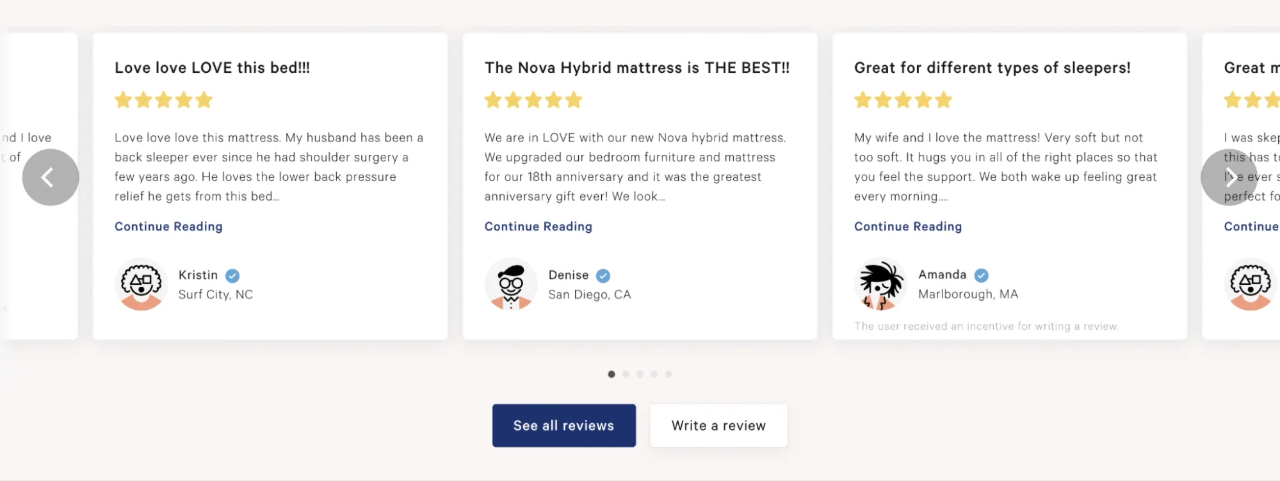
Among all trust signals, social proof consistently carries the most weight. Not because it’s trendy, but because it short-circuits uncertainty.
Why Social Proof Works
Human decision-making relies on shortcuts. In ecommerce, three biases matter most:
- Bandwagon effect: If others are buying, the risk feels lower
- Uncertainty reduction: Reviews answer questions buyers didn’t know how to ask
- Authority bias: Validation from credible sources reduces hesitation
Social proof works when it feels relevant and real, not when it’s loud.
Types of Social Proof and Their CRO Impact
Different formats serve different roles:
- Customer reviews: Reduce functional risk
- UGC: Normalizes ownership and use
- Testimonials: Add narrative context
- Expert or media validation: Establish authority
Effective CRO treats these as tools, not ornaments.
When Social Proof Fails
Social proof backfires when it feels generic or disconnected from the decision being made.
- Too many reviews with no context
- Testimonials hidden far from CTAs
- UGC that looks staged
- Claims without specificity
Trust erodes quickly when proof feels manufactured.
Context Matters: Where Trust Signals Actually Convert
Trust is situational. The same signal can lift conversion in one place and do nothing in another.
Homepage: Authority and Brand Legitimacy
At this stage, visitors are asking a simple question: Is this brand real and credible?
Effective signals here include:
- Media mentions
- Recognizable partnerships
- Customer volume metrics
- Clear positioning
The goal is reassurance, not persuasion.
Product Pages: Proof of Quality and Satisfaction
Product pages carry the highest burden of trust.
Here, buyers need confirmation that:
- The product works
- Others like them are satisfied
- Risk is manageable
Reviews, UGC, guarantees, and detailed product information belong near decision points, not buried below.
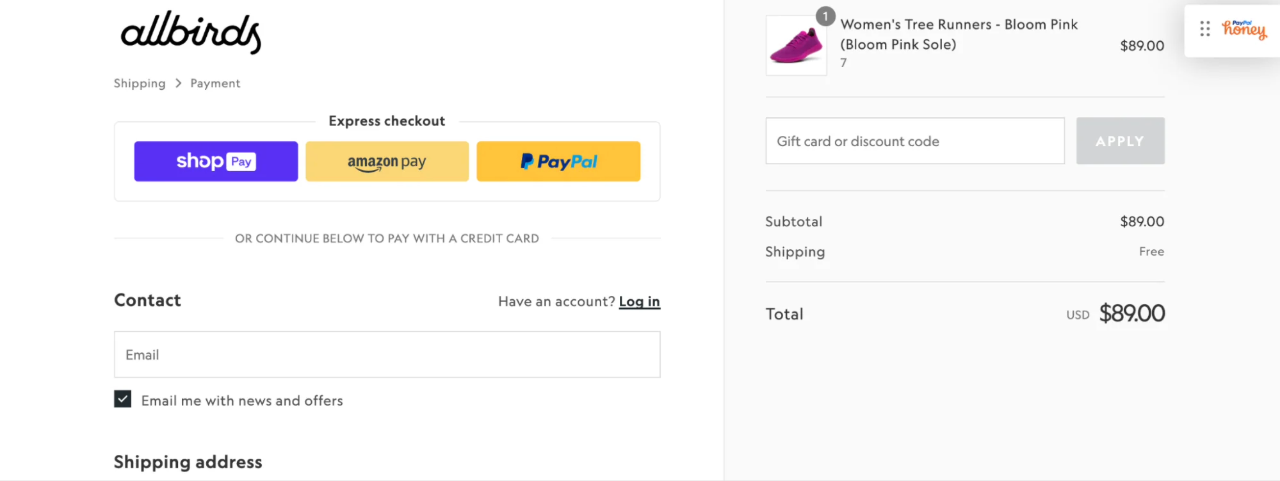
Checkout: Security and Risk Reversal
Checkout is where even confident buyers pause.
Security icons, payment clarity, return policies, and visible support reduce abandonment not by convincing, but by calming.
Why Smaller Brands Depend on Trust Signals Even More
For established brands, trust is accumulated over time. Recognition, familiarity, and prior experience carry buyers through moments of uncertainty. Smaller brands start every session without that buffer.
This changes how buyers evaluate risk. When brand recognition is low, the store itself must perform the work that reputation would otherwise handle. Pages are scrutinized more closely. Claims are questioned. Gaps in information carry more weight.
In this context, trust is often borrowed rather than earned. Emerging brands rely on external validation and structural reassurance to reduce uncertainty early in the journey.
Common sources of borrowed trust include:
- Customer evidence: reviews, usage photos, and feedback that show real ownership
- Platform credibility: familiar payment providers, recognizable integrations, and secure checkout infrastructure
- Policy clarity: returns, guarantees, and delivery expectations that feel fair and transparent
These signals don’t replace brand equity, but they reduce the disadvantage of not having it yet.
Strong trust signals also influence how efficiently a brand can grow. When uncertainty is resolved early, traffic converts more consistently. Paid acquisition becomes easier to scale because fewer clicks are lost to hesitation. Improvements compound across channels rather than being isolated to conversion rate alone.
For smaller brands, trust is not a finishing touch. It is a growth lever that determines whether scaling efforts amplify results or magnify friction.
Trust Signals Beyond Conversion: LTV, Retention & Post-Purchase Confidence
Trust continues to influence outcomes after the transaction is complete. The expectations set during the buying process shape how the product is evaluated once it arrives.
When trust signals communicate accurately, through clear policies, realistic product representation, and transparent delivery information, buyers experience less uncertainty after purchase. Fewer surprises reduce dissatisfaction, which lowers return rates and support friction.
That same confidence affects future behavior. Customers who feel the transaction unfolded as expected are more likely to repurchase, leave credible reviews, and engage with the brand again without re-evaluating trust from scratch.
Long-term value grows when trust signals align perception with reality. The closer that alignment, the more stable retention and repeat purchasing become.
How to Improve Trust Signals in Practice
Trust can be measured, audited, and improved deliberately. The work starts by identifying where hesitation appears in the buying journey, not by judging whether a page looks polished.
In one engagement, a product page with solid performance still showed signs of late-stage friction concentrated near the Add to Cart button. A heuristic review surfaced three recurring issues: insufficient credibility reinforcement, weak risk reassurance, and unclear payment signals at the moment of commitment.
The opportunity was not a redesign. It was precision.
The working principle was simple: show proof, remove risk, and confirm security exactly where buyers hesitate.
Five targeted changes followed:
- Instant social proof near the CTA
- Real-life validation instead of polished imagery
- Clear risk reversal messaging
- Payment and security reassurance
- Subtle speed and reliability signals
Results:
- +22.95% conversion rate (95% confidence)
- 204 additional monthly orders
- $20,511 in incremental monthly revenue
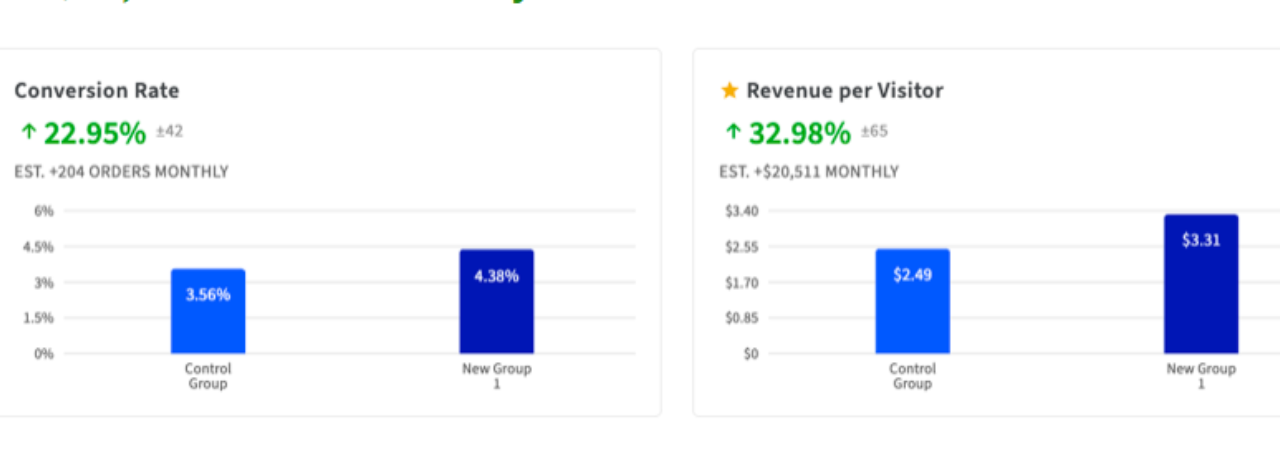
Even strong pages can climb when micro-doubts are addressed intentionally.
Recommendation 1: Reviews Where Decisions Are Made
Reviews are most effective when they appear before doubt has time to form. Placing concise, relevant feedback near the primary call to action allows buyers to validate their decision without leaving the page or scanning for reassurance elsewhere.
This approach works best on product pages with high purchase intent, where visitors are already evaluating whether to commit. The goal is not to overwhelm with volume, but to provide just enough confirmation to keep momentum intact.
Recommendation 2: Real Usage Over Polished Imagery
Studio images help establish presentation quality, but real customer visuals answer a different question: what ownership actually looks like.
Integrating UGC into the product gallery reduces emotional distance by showing the product in realistic contexts. This normalizes the purchase and lowers the psychological barrier between consideration and action. Engagement typically increases because buyers spend more time evaluating outcomes rather than imagining them.
Recommendation 3: Risk Reversal at Commitment Points
Risk reversal works when it is visible at the moment commitment is requested, not buried in policy pages.
Clear guarantees, straightforward return language, and transparent expectations reduce hesitation by limiting perceived downside. When buyers understand how issues will be handled, moving forward feels safer and more controlled.
Testing Trust Signals with a CRO Mindset
Trust signals are not universal fixes. Their effectiveness depends on audience awareness, traffic temperature, and where hesitation appears in the journey.
Product pages with high intent often benefit from reassurance placed close to the call to action. Earlier-stage pages require credibility before proof. Checkout environments demand clarity and safety over persuasion. Testing should reflect those differences rather than applying the same signals everywhere.
Meaningful tests focus on how trust affects behavior, not just final conversion rate. Scroll depth, interaction with secondary elements, cart progression, and abandonment timing often reveal whether reassurance is resolving uncertainty or being ignored.
Trust also changes as brands grow. Signals that compensate for low recognition early on may lose impact once familiarity increases. CRO testing should adapt alongside that shift.
Common Mistakes When Testing Trust Signals
One frequent mistake is testing too many reassurance elements at once, which makes it impossible to identify what actually reduced hesitation.
Another is adding trust signals without removing competing noise, diluting their effect.
Treating trust as static is another issue. Brands evolve, traffic sources change, and buyer expectations rise. Signals that once felt credible can become background clutter if they are not revisited.
Effective testing treats trust as a variable, not a constant, and evaluates it in the context of real decision-making moments rather than surface-level best practices.
Conclusion
Trust determines whether intent turns into action.
In ecommerce, buyers rarely abandon because they lose interest. They leave when uncertainty remains unresolved at the moment evidence is required. Stores that treat trust as a system, something built, measured, and refined across the journey, remove that uncertainty before it interrupts momentum.
Design can earn attention. Offers can create interest. Long-term growth depends on how consistently a brand reduces hesitation where decisions are made.
That work compounds over time.
Want to reduce hesitation where conversions are won or lost?
Explore Vasta’s CRO, Shopify development, and SEO services, or follow our CEO, Igor Silva, on Instagram and YouTube for practical insights from real ecommerce experiments and benchmarks.