





Most ecommerce owners can describe their ad strategy in detail. Fewer can clearly explain how their ecommerce sales funnel actually works from first visit to repeat purchase.
That gap matters.
Revenue does not grow because traffic grows. Revenue grows when traffic moves through a structured ecommerce conversion funnel that turns attention into orders and orders into repeat customers.
If paid traffic paused tomorrow, would your ecommerce customer journey still produce consistent sales?
That question reveals whether you have campaigns or a real system.
What an Ecommerce Sales Funnel Really Is
Most founders can sketch the traditional funnel on a whiteboard. They understand that people discover the brand, evaluate options, and eventually buy.
That framework is not wrong, but it is incomplete because it overlooks the operational mechanics and behavioral friction that actually determine whether revenue materializes.
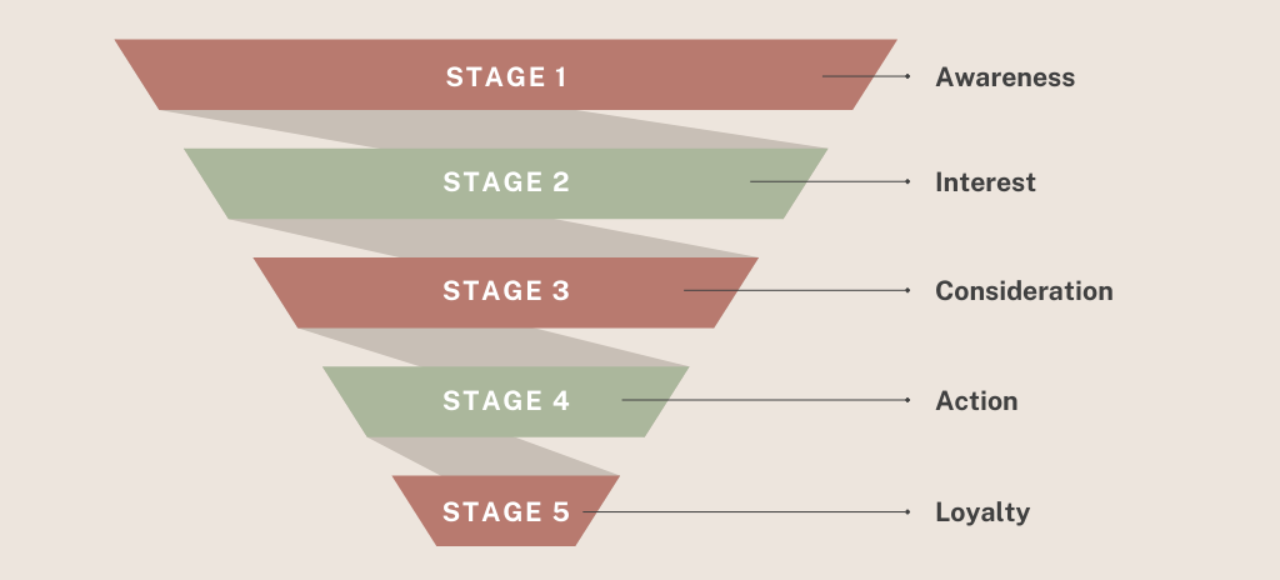
The real leverage in ecommerce comes from understanding what happens inside those stages. The micro-decisions. The technical constraints. The behavioral friction. The financial impact of each drop-off. A sales funnel in theory is linear. A sales funnel in practice is operational.
That difference is where revenue is won or lost.
It’s Not Just Awareness, Consideration and Purchase
In textbooks, the funnel is simple. Awareness at the top. Consideration in the middle. Purchase at the bottom.
Inside a real ecommerce operation, the funnel is more mechanical.
It includes:
- Traffic sources and keyword intent
- Category and product page structure
- UX and site navigation
- Add to cart behavior
- Checkout completion
- Post purchase communication
- Repeat purchase cycles
When someone searches for a product on Google, lands on a collection page, compares options, reads reviews, adds to cart, abandons, receives an email, returns and completes checkout, that entire path is the ecommerce sales funnel in motion.
The funnel is not a diagram but the structured sequence of decisions your store enables and influences at every step of the customer journey.
Funnel as a Revenue System, Not a Marketing Diagram
An ecommerce sales funnel becomes strategic when it allows you to estimate revenue before it happens.
If you know how many visitors reach product pages, what percentage adds to cart, how many complete checkout, and how often customers return, you can project revenue based on conversion mechanics rather than hope. Each stage has a measurable impact, and small improvements in mid-funnel performance often generate more profit than large increases in traffic.
Without that clarity, sales fluctuate with ad spend and promotions. With it, traffic, UX, checkout, and retention operate as a structured revenue system rather than isolated marketing activities.
Stage 1: Traffic and Awareness
Traffic is the entry point of your ecommerce sales funnel, but it is also where many structural mistakes begin.
Traffic starts the funnel, but what matters is attracting visitors with real buying intent, not just increasing volume.
Where Your Visitors Come From
Different traffic sources enter the funnel with different levels of intent, cost, and volatility.
Organic search driven by a strong SEO strategy brings users who are actively looking for something specific. When someone searches for “best running shoes for flat feet” or “protein powder for muscle gain”, they are already in problem-solving mode.
This type of traffic often converts at a higher rate because it is demand-driven rather than interruption-driven.
Paid media works differently. It interrupts attention. It can scale quickly, but it depends on constant budget allocation and creative performance. When acquisition costs rise or ads fatigue, traffic quality often declines before volume does.
Social traffic is typically earlier in the ecommerce customer journey. It may be curiosity-based rather than solution-based, which means the site must educate more before selling. If the landing experience assumes high intent when intent is low, bounce rates increase.
Email traffic usually performs closer to the bottom of the funnel. These visitors already know the brand. Their conversion rate is often higher, and their acquisition cost lower, because the relationship has already been established.
The structural decision for owners is not simply how to generate traffic, but how to balance channels so that your ecommerce sales funnel is not overly dependent on one volatile source.
Traffic Quality vs Traffic Volume
A common mistake when building an ecommerce funnel is chasing volume.
Ten thousand untargeted visitors rarely outperform two thousand visitors searching for a product category with commercial intent.
Traffic quality is measured by:
- Bounce rate
- Session duration
- Pages per session
- Add to cart rate
If organic visitors explore multiple product pages and paid traffic exits in under ten seconds, your funnel has a targeting or messaging issue.
Sales funnel optimization begins with matching traffic to intent, not increasing clicks.
Aligning Message With Audience Intent
The promise that brings a visitor to your site must be fulfilled immediately on the landing page. When intent and experience don’t match, users leave.
If someone clicks on “premium leather travel bags” and lands on a generic homepage full of discounts and mixed categories, friction increases. The visitor must search again for what they already requested. Each extra step lowers conversion probability.
For SEO, alignment is even more critical. A page ranking for a high-intent keyword must behave like a direct solution, not a broad catalog. That means a clear headline reflecting the query, relevant products visible immediately, structured filters, transparent pricing, and visible trust signals.
A landing page is the operational bridge between traffic and conversion. When it reflects user intent precisely, the ecommerce sales funnel becomes more efficient and less dependent on increasing traffic volume.
Stage 2: Product Discovery and Engagement
Once traffic enters the funnel, revenue depends on how efficiently visitors move from browsing to buying intent. This stage determines whether your store behaves like a guided decision environment or an open warehouse where users get lost.

Category Pages as Funnel Accelerators
Collection pages are not neutral layouts. They determine how quickly users narrow options and move toward a decision.
When structured correctly, category pages reduce cognitive load. They organize choice. A high-performing collection page aligns with the keyword or campaign that brought the visitor in, clearly defines the category, and immediately surfaces relevant products without requiring scrolling through unrelated items.
Strong category pages typically include:
- Headlines aligned with search or campaign intent
- Filters that reflect how customers actually choose
- Visible pricing and variant clarity
- Sorting logic that prioritizes bestsellers or highest margin products
- Contextual links to related subcategories
This structure shortens the path to product page views. If users land on a collection page and fail to reach a product page, the funnel stalls early. Improving category-to-product click-through rate often produces measurable revenue gains without increasing traffic.
Product Pages That Reduce Friction
The product page is where buying intent becomes commitment.
At this stage, visitors are no longer browsing for inspiration but actively assessing risk before committing to a purchase.
A high-converting product page answers specific commercial questions:
- Is this the right solution for my problem
- Why is this better than alternatives
- Can I trust this brand
- What happens if it doesn’t meet expectations
Clarity reduces hesitation. Structured descriptions, benefit-focused copy, comparison elements, delivery timelines, returns policy visibility, and strong social proof all lower perceived risk.
CRO at this stage is behavioral, not cosmetic. Heatmaps, scroll depth, add-to-cart rates, and exit patterns reveal where doubt appears. Removing friction at this point often increases overall funnel profitability because every traffic source feeds into product pages. A one-point increase in product page conversion rate affects organic, paid, email, and social simultaneously.
UX and Site Structure
Site structure determines whether users move forward or circle back.
Navigation should reflect how customers think, not how the brand organizes internally. Categories must be intuitive. Search functionality must be reliable. Important paths should be reachable within a few clicks.
Silent drop-offs often happen because users cannot quickly locate what they expect. When visitors hesitate or restart navigation, friction increases and intent weakens.
A well-designed UX supports the ecommerce conversion funnel by reducing friction and guiding users efficiently toward purchase.
Stage 3: Add to Cart and Checkout
This is the most fragile point of the ecommerce sales funnel because intent is high but hesitation is highest. Small frictions at this stage have direct financial consequences.
Reducing Checkout Friction
Many stores lose revenue not because of weak products, but because checkout introduces unnecessary complexity.
Long forms, forced account creation, surprise shipping costs, and unclear delivery timelines create doubt at the worst possible moment. Each additional field or unexpected cost increases abandonment probability.
Checkout optimization is operational simplification. Minimize required inputs, show total costs early, and allow guest checkout. Even a one-point increase in checkout completion rate can produce meaningful revenue growth because it captures demand you already paid to acquire.
Payment Flexibility and Trust
Payment options directly influence conversion.
Customers look for familiar gateways, local payment methods, installment options, and visible security cues. When those signals are absent, hesitation increases even if the product is strong.
Trust at checkout is practical and immediate. Clear policies, recognizable providers, and transparent pricing reduce last-minute uncertainty and protect conversion rates.
Performance and Mobile Optimization
Checkout speed is part of the funnel, not just a technical metric.
Mobile users represent a significant share of traffic, and slow loading pages or unstable scripts increase abandonment sharply. Development decisions such as clean code, optimized assets, and stable integrations protect the funnel during peak traffic and promotional periods.
When performance declines, the funnel does not fail loudly. It simply converts less.
Stage 4: Post Purchase and Retention
The funnel does not end at checkout. It either compounds revenue or forces you to reacquire the same customer from scratch.
Confirmation Page as Opportunity
The confirmation page is a high-attention moment that most stores underutilize.
Instead of functioning as a static receipt, it can strategically introduce:
- Complementary products
- Referral incentives
- Loyalty or subscription options
Because trust has already been established, even small post-purchase offers can lift average order value without additional acquisition cost, directly improving contribution margin.
Email and Lifecycle Flows
Retention starts immediately after payment.
A structured lifecycle system typically includes:
- Order confirmation and shipping updates
- Product usage guidance
- Cross-sell recommendations
- Replenishment reminders
These flows extend the ecommerce customer journey and increase customer lifetime value. When repeat purchase becomes predictable, revenue becomes less dependent on continuous paid acquisition.
Customer Experience Beyond the Transaction
Delivery speed, packaging, support response time, and returns management influence future Retention is also operational.
Delivery speed, packaging quality, support responsiveness, and return processes shape whether a customer buys again. If post-purchase experience disappoints, the funnel effectively resets and you must invest again to win back the same buyer.
A strong retention layer turns one transaction into a revenue loop rather than a one-time event.
The Hidden Leaks in Most Ecommerce Funnels
Most revenue problems are not dramatic failures but small inefficiencies that compound across stages. When these leaks go unmeasured, growth slows without a clear explanation.
Misaligned Traffic
Traffic misalignment occurs when the promise that drives the click does not match the landing experience.
If ads emphasize premium positioning but the page highlights discounts, or if SEO brings in informational queries to transactional pages, bounce rate increases and session depth drops. The result is distorted funnel data. You may assume the product page is weak when the real issue is intent mismatch at the top of the funnel.
Diagnosing this requires comparing channel-level behavior. If one source consistently shows lower engagement or add-to-cart rates, the problem may be targeting or messaging rather than design.
Poor Product Market Fit Signals
Certain metrics reveal deeper structural issues.
High bounce rate, low session duration, and weak add-to-cart rates often indicate that the offer itself is not resonating. This may involve pricing, positioning, differentiation, or perceived value.
No amount of UI optimization compensates for a weak value proposition. Funnel analysis must include product-market signals, not just layout adjustments.
Weak Retention Strategy
A funnel that converts but does not retain is economically unstable.
When repeat purchase rate is low, customer acquisition cost must be recovered in a single transaction. That limits margin flexibility and increases dependency on constant traffic acquisition.
Without structured retention loops, every month effectively resets revenue to zero. A resilient ecommerce sales funnel includes acquisition efficiency and lifetime value expansion, not just first-time conversion.
Connecting SEO, CRO and Performance Inside the Funnel
An ecommerce sales funnel does not function through isolated tactics. It performs when acquisition, on-site behavior, and technical infrastructure operate as one coordinated system.
SEO Feeds the Top of Funnel
SEO attracts existing demand and introduces visitors who are actively searching for specific products or solutions. When keyword strategy is tightly aligned with category architecture and product intent, organic traffic enters the funnel with higher commercial readiness.
This reduces acquisition cost per order and stabilizes margins over time. Unlike paid media, which scales through budget increases, organic visibility compounds and strengthens the top of the funnel without proportional increases in spend.
CRO Improves Mid and Bottom Funnel
Conversion rate optimization increases the efficiency of traffic already acquired. By analyzing behavioral data across product pages, carts, and checkout, you identify friction points that limit progression through the funnel.
Improvements in add-to-cart rate, checkout completion, or average order value amplify every traffic source at once. Instead of relying on additional acquisition, CRO raises revenue output from existing inputs.
Development Sustains the Entire Funnel
Site speed, mobile stability, scalable architecture, and clean integrations ensure that SEO traffic is captured, CRO tests are reliable, and checkout performs under peak demand. Technical instability silently erodes conversion rates even when marketing is strong.
When SEO, CRO, and development operate separately, gains in one area are limited by weaknesses in another. When integrated under one coordinated growth strategy, they reinforce each other and transform the ecommerce conversion funnel into a stable growth system.
How to Audit Your Current Sales Funnel
A funnel audit is not about collecting metrics. It is about identifying where revenue potential is being lost and quantifying the financial impact of that loss.
Identify Drop Off Points
Start by mapping how users move through each stage of the funnel and measuring progression rates between them. The key transitions typically include:
- Traffic to product page rate
- Product page to add-to-cart rate
- Cart to checkout rate
- Checkout completion rate
- Repeat purchase rate
These transitions reveal where intent weakens. For example, a healthy add-to-cart rate but low checkout completion often signals friction at payment or unexpected costs. A strong traffic volume with low product page engagement may indicate misaligned intent or weak positioning.
The goal is not to find the lowest percentage, but to identify the stage where improvement would produce the largest revenue lift.
Measure Conversion by Channel
Not all traffic behaves equally inside the funnel, so performance must be segmented by channel.
Compare how organic, paid, email, and social traffic convert at each stage. If organic visitors show higher product page engagement and stronger checkout completion, strengthening SEO may improve revenue efficiency without increasing ad spend. If paid traffic drops off early, the issue may lie in targeting, creative promise, or landing page alignment rather than checkout mechanics.
Channel-level analysis prevents misdiagnosis and ensures that funnel improvements are targeted, not generalized.
Calculate Revenue Impact Per Stage
Every percentage point inside the funnel has a financial value.
Estimate how much additional revenue a one-point increase in product page conversion, checkout completion, or repeat purchase rate would generate based on your current traffic and order volume. This calculation shifts the conversation from optimization ideas to investment priorities.
Sales funnel optimization is not about testing randomly. It is about directing effort toward the stage that constrains revenue most significantly.
Building a Funnel That Grows With You
Revenue stability depends less on promotional bursts and more on how well the underlying funnel converts and retains demand.
From Campaign Based to System Based Growth
Many ecommerce stores operate in cycles. Revenue increases when campaigns launch, promotions run, or budgets increase. When media pressure decreases, sales drop. This pattern signals that acquisition is doing all the work.
A scalable ecommerce sales funnel distributes performance across multiple layers:
- SEO generates consistent inbound demand
- Product and category pages convert efficiently
- Checkout minimizes abandonment
- Retention increases lifetime value
When these components function together, revenue does not depend solely on paid traffic intensity. Instead of chasing monthly spikes, the business benefits from steady baseline performance that campaigns can amplify rather than rescue.
Creating Predictable Revenue Loops
Predictability comes from understanding how acquisition and retention interact.
If your store acquires 1,000 new customers per month and 30 percent repurchase within 60 days, next month’s revenue does not start from zero. It builds on prior activity. That is the foundation of compounding growth.
When repeat purchase rate increases, customer acquisition cost becomes more sustainable because revenue is generated across multiple transactions rather than a single order.
The practical test is simple. If paid traffic paused tomorrow, would organic search, email flows, and returning customers continue generating meaningful revenue? If not, the funnel is structurally incomplete.
A well-built ecommerce conversion funnel integrates SEO, CRO, UX, development, and retention into a coordinated revenue system. When structured correctly, it becomes an operational asset that scales with traffic, product expansion, and market changes rather than collapsing under them.
Conclusion
An ecommerce sales funnel is the structure that determines how efficiently traffic turns into revenue and revenue turns into repeat business.
When SEO, UX, checkout, and retention operate together, growth becomes more predictable and less dependent on constant increases in ad spend. When they don’t, revenue fluctuates with campaign intensity.
The critical question is simple: do you know which stage of your funnel is limiting growth right now?
If not, the priority is not more traffic, but a clearer system.